What Is the Workflow From Maya to Zbrush Prop Art
Rogelio Magaña has always loved games and movies, and had a passion for creating what he saw on screen. As luck would have it, he met a instructor who was opening a small schoolhouse in the town he lived in, offering courses in 3D modeling. Rogelio started at that school, and since and so he has been practicing his modeling skills, learning, and improving. His dream is to work as an Environment Artist in Games.
Rogelio has taken the time to share his processes when creating games for props using Maya and ZBrush. Read on!
References
First of all you need to program the project and gather as many references every bit you lot tin, from as many angles as yous can. In my case, since I recreated an existing object, I was limited to the references I could observe of the actual object. If you decide to make an original pattern, get together different references to get inspired.
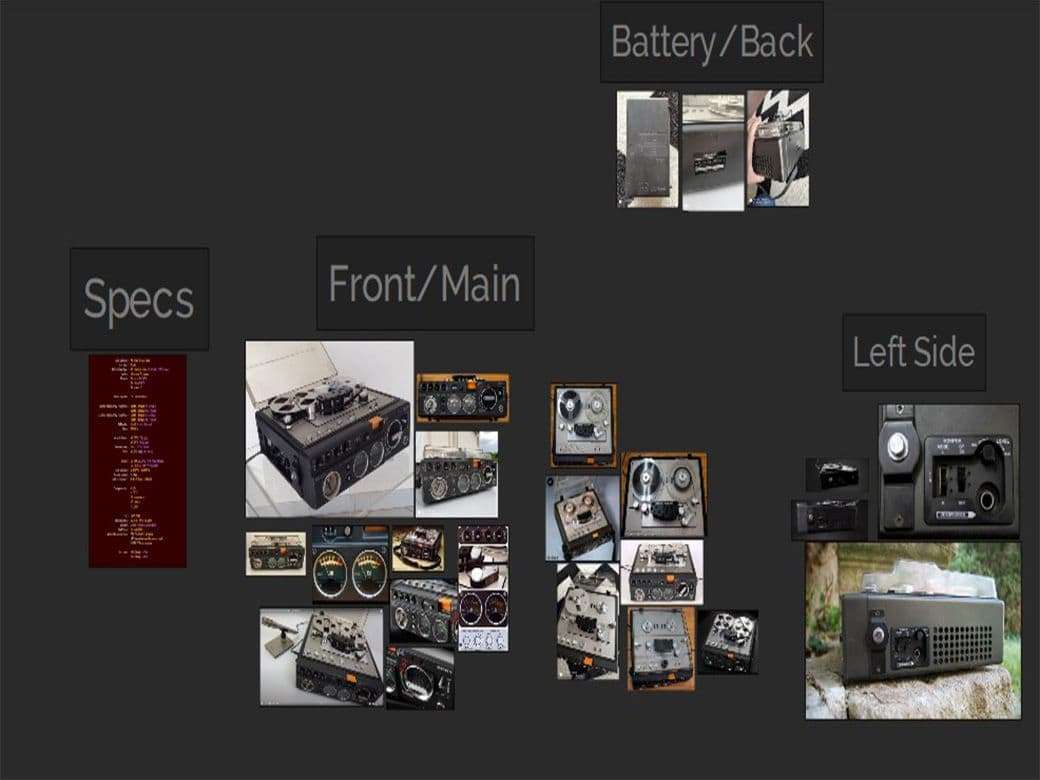
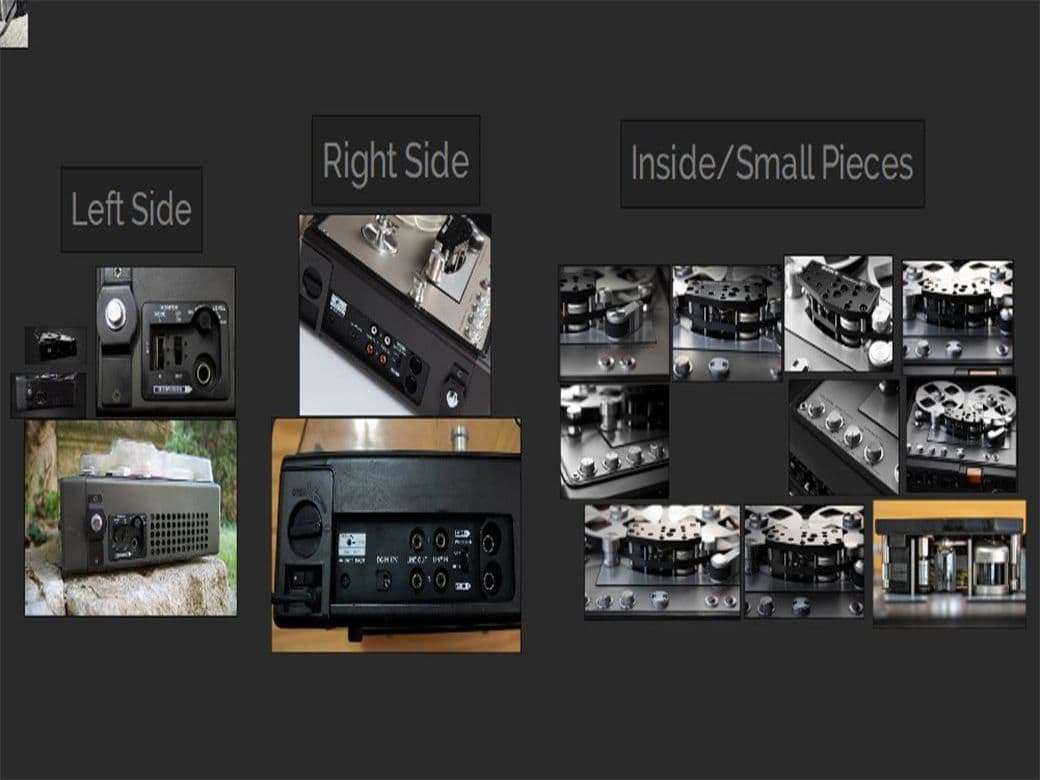
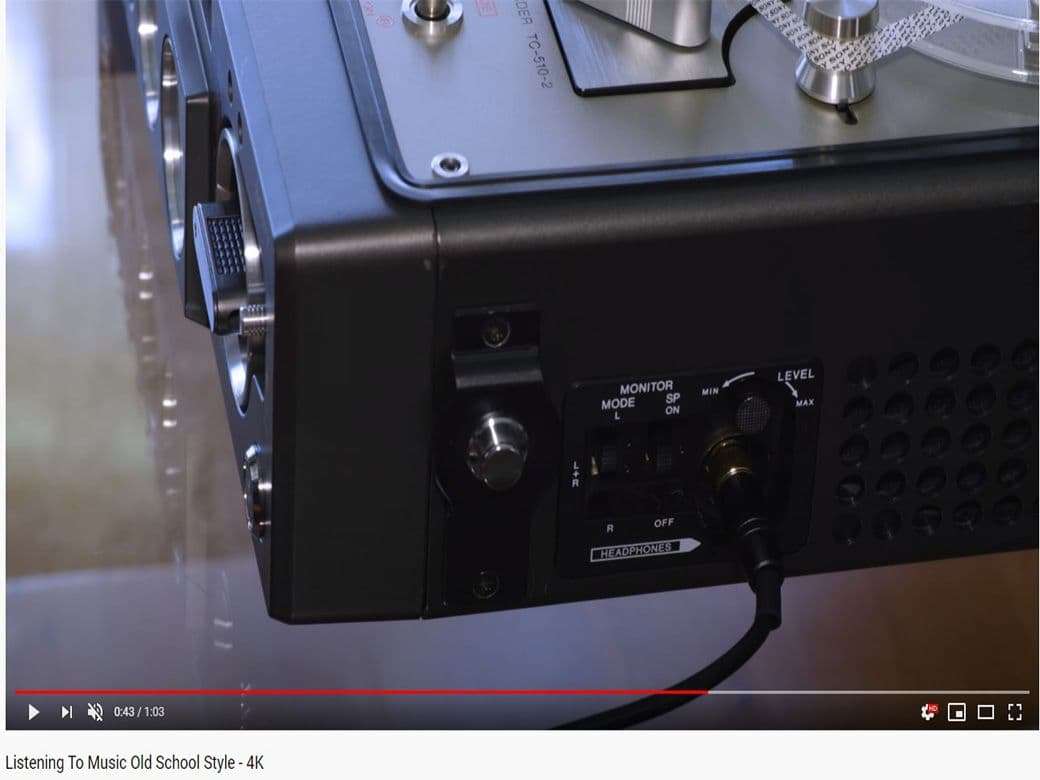
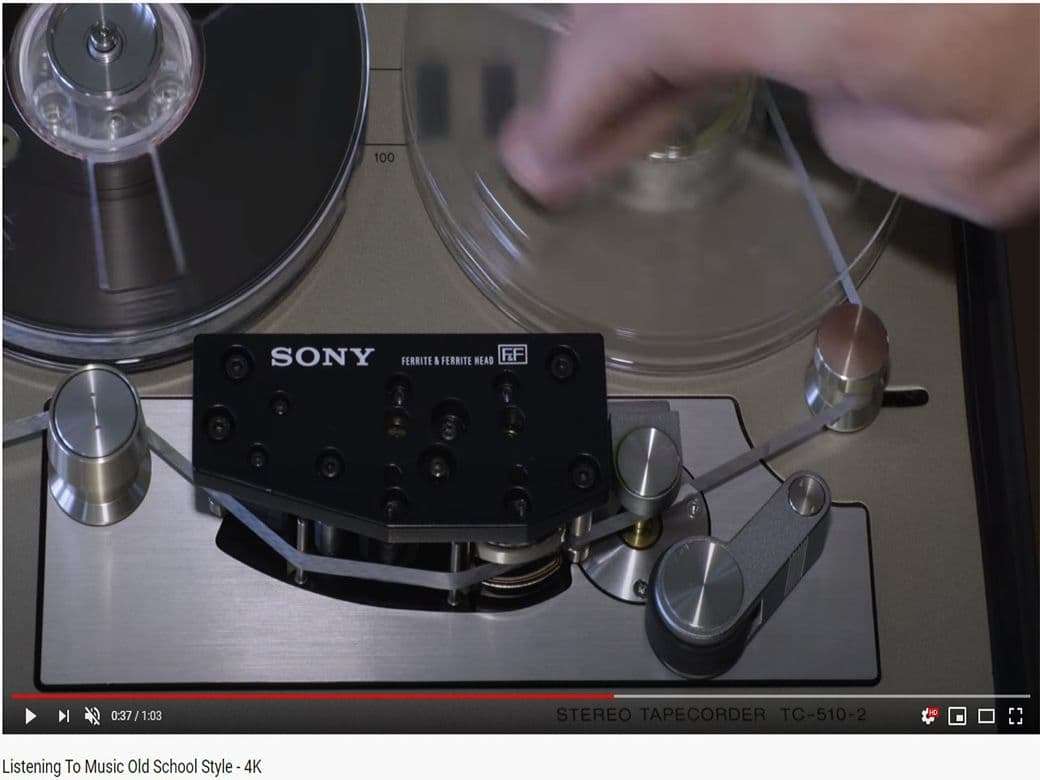
An of import part of gathering references is to non experience express to only looking in Google and Pinterest for images. You tin can search on youtube, blogs, articles and many more sites. For the recorder prop I worked on, my main references were 2 Youtube videos. The guy using the recorder used a very expert camera, and took skilful shots of the recorder.
Blocking Out
Blocking is the near hard/important part. This is the most of import part of the process considering if you brand a error or start with a wrong base the whole project could crumble. Spend a lot of time messing with your blockout until you are happy with your outcome. I decided to beginning with the bodily measurements of the object since I didn't go a close to orthographic image to match it.
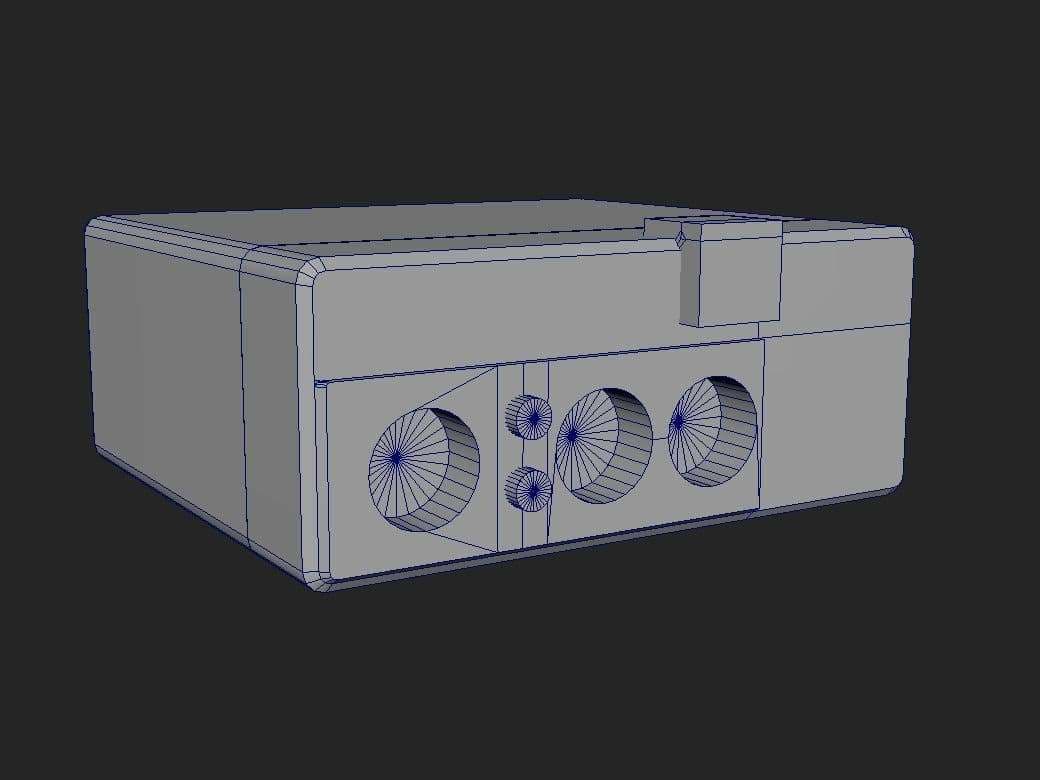
Once I had a feel of the proportions, and where the pieces were going to be placed, I started doing some simple boolean operations so I could become a complete feel of how the object was looking, and if I needed to brand some changes. A Large tip I can give y'all is not to be scared of messing up. This is the perfect step to make mistakes and fixing them. I always end upward deleting geometry and starting again until I'm completely happy with what I've got to proceed going.
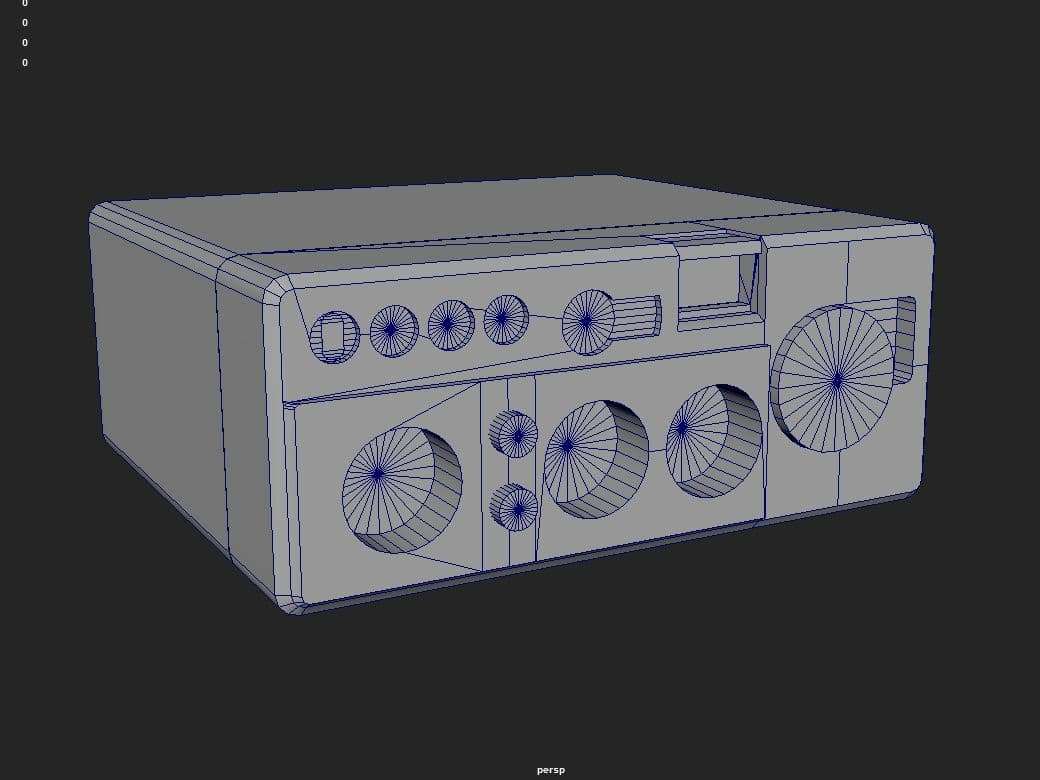
If I'k happy with the proportions and where things are going I keep adding the smaller pieces to go along seeing how the full object is going.
Modeling
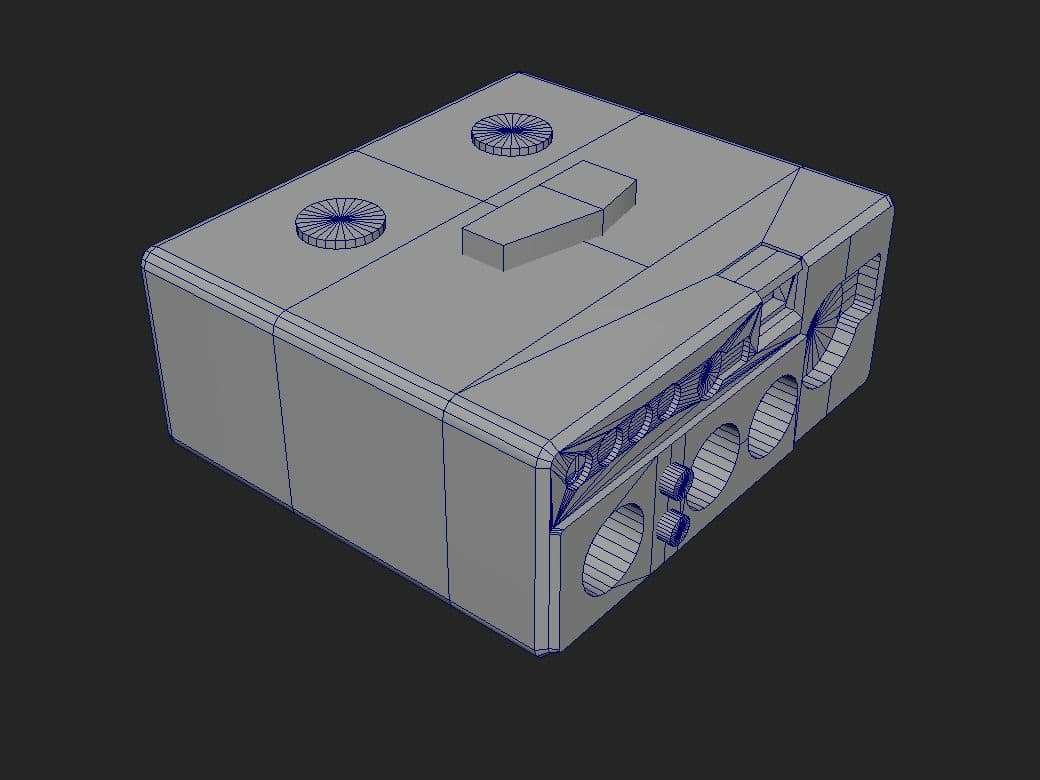
Now that the blockout is washed, and we are happy with what we have, information technology starts getting fun! This is where I started modeling each piece to resemble how it was going to expect in the end. Some other tip I can requite you in this stride, is to work every bit clean every bit possible then that the low poly step is WAY easier.
I kept adding details and booleans where I needed them...
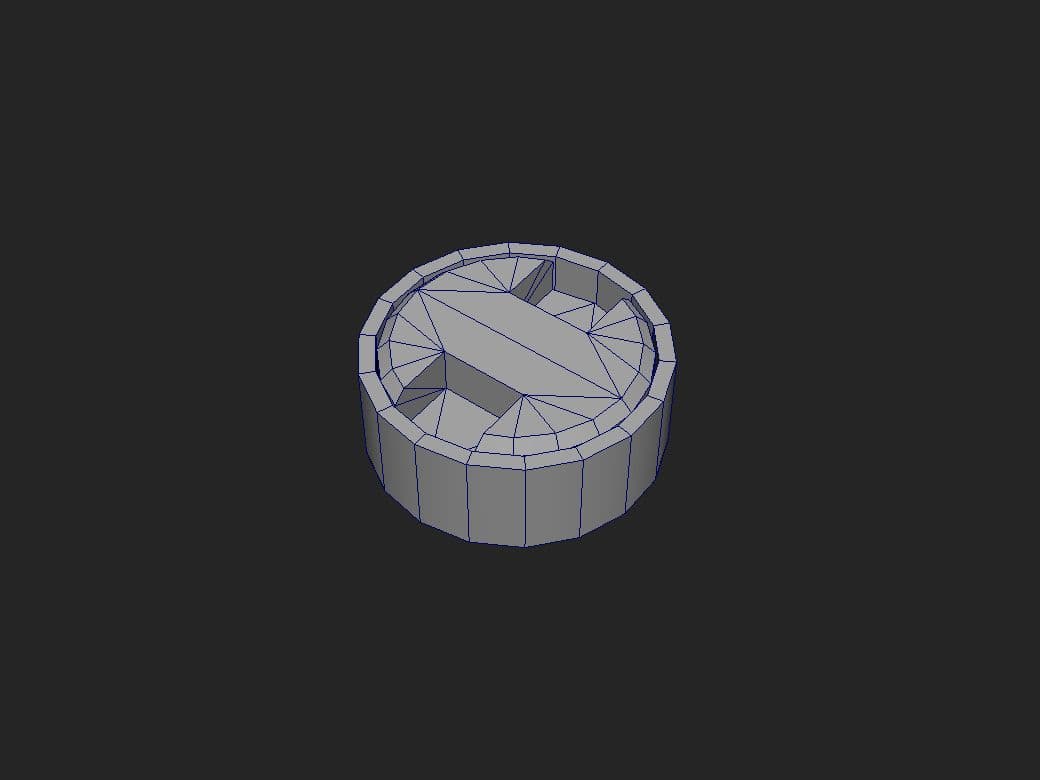
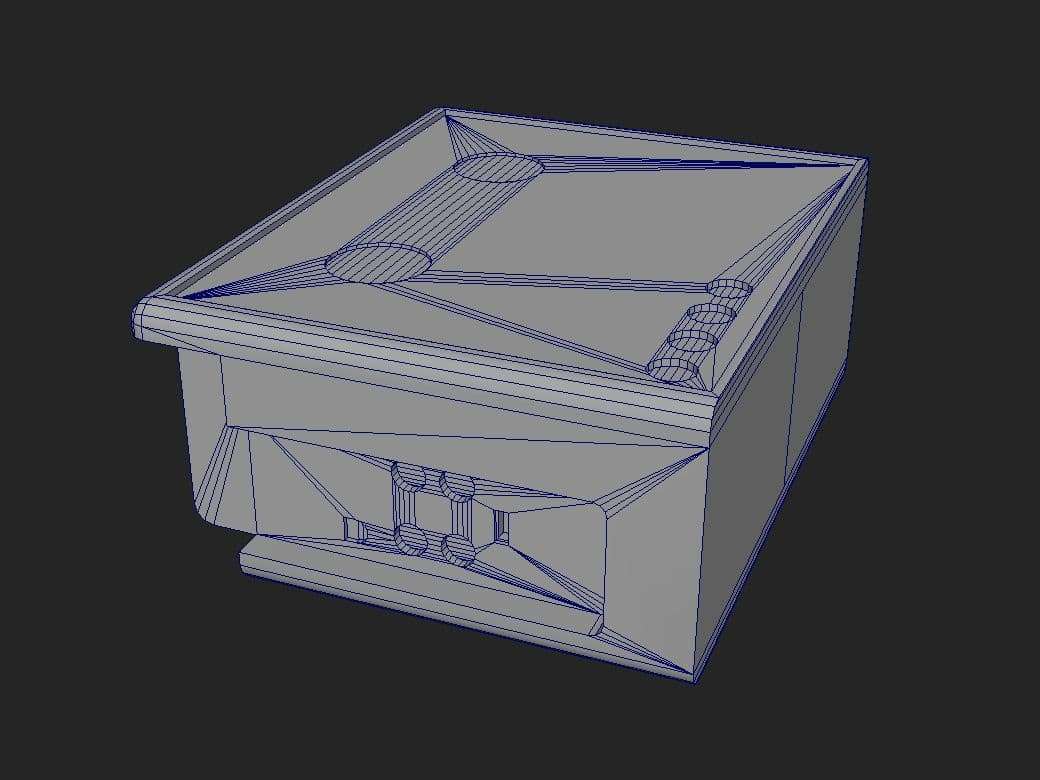
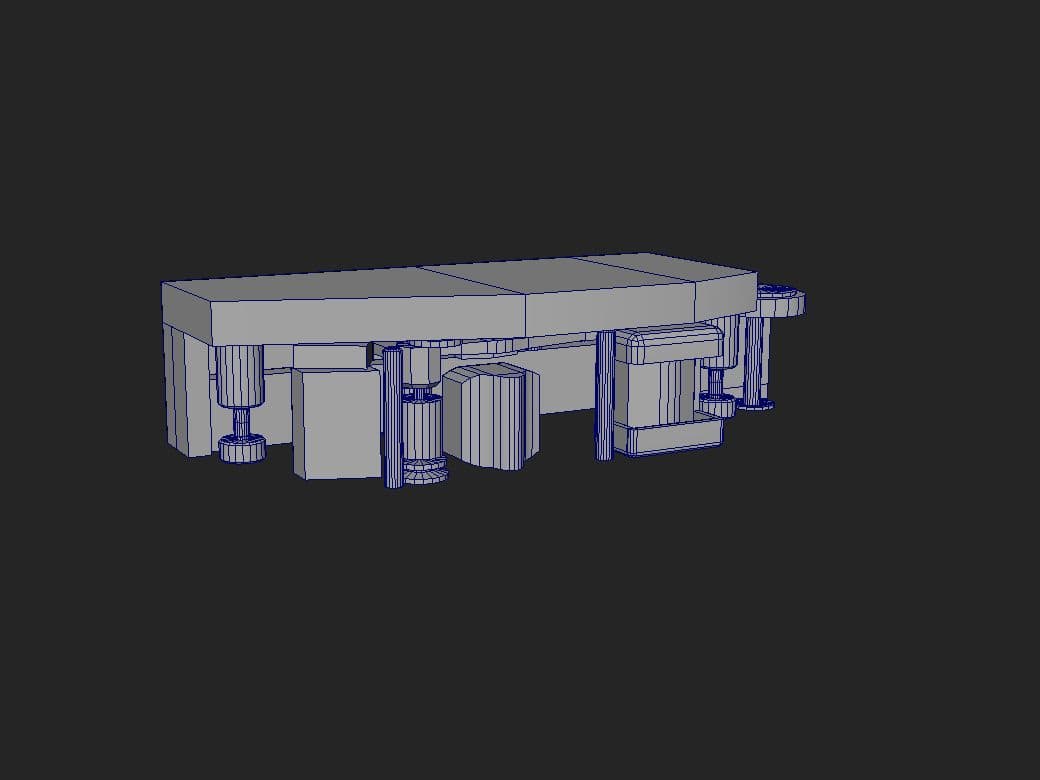
Blocking is the most important part of the process because if you make a error or commencement with a wrong base the whole project could crumble.
While yous are modeling, you should always exist thinking about the next steps, and how you are going to brand your life easier by preparing for them. I always like to prepare the pieces I'm going employ later in Zbrush for carving. If I know for case that a push is going to need detailed lines, I ready the objects I volition employ for them.
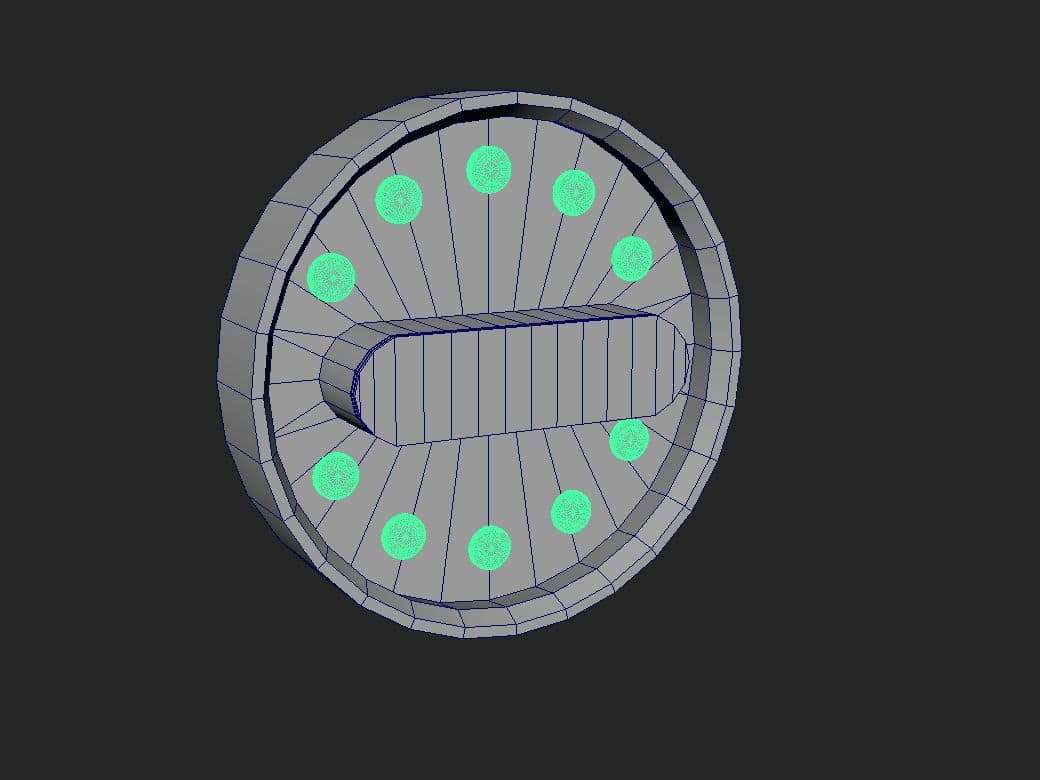
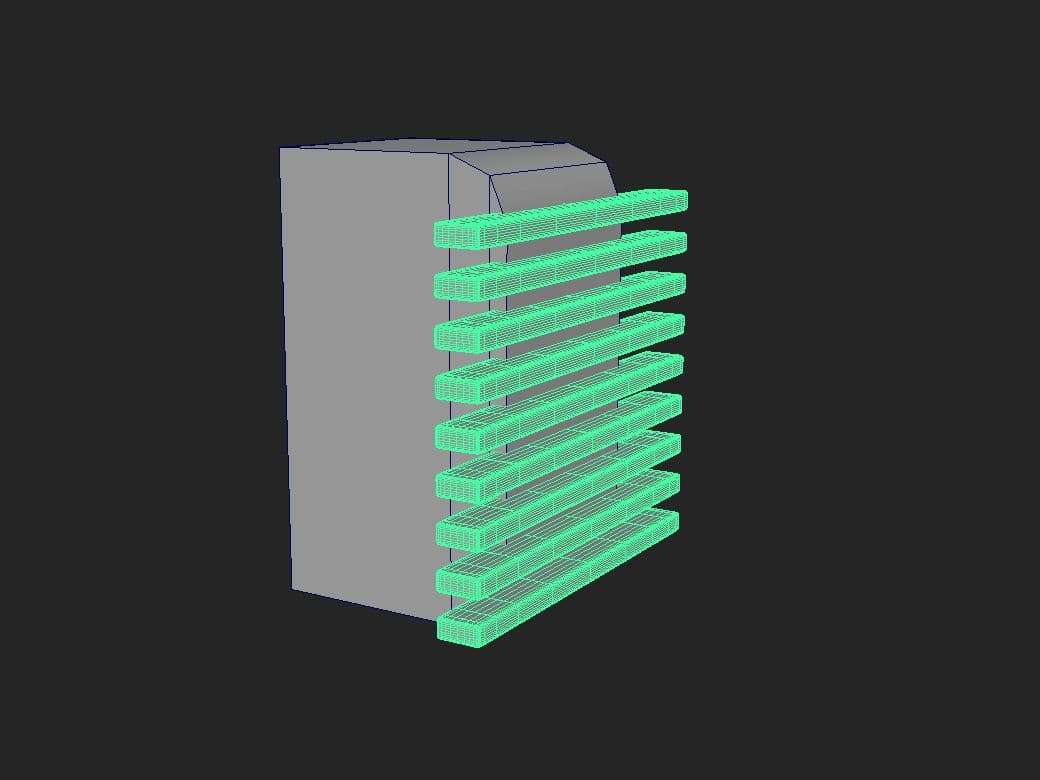
Once modeling is done nosotros are set to get to the high poly object.
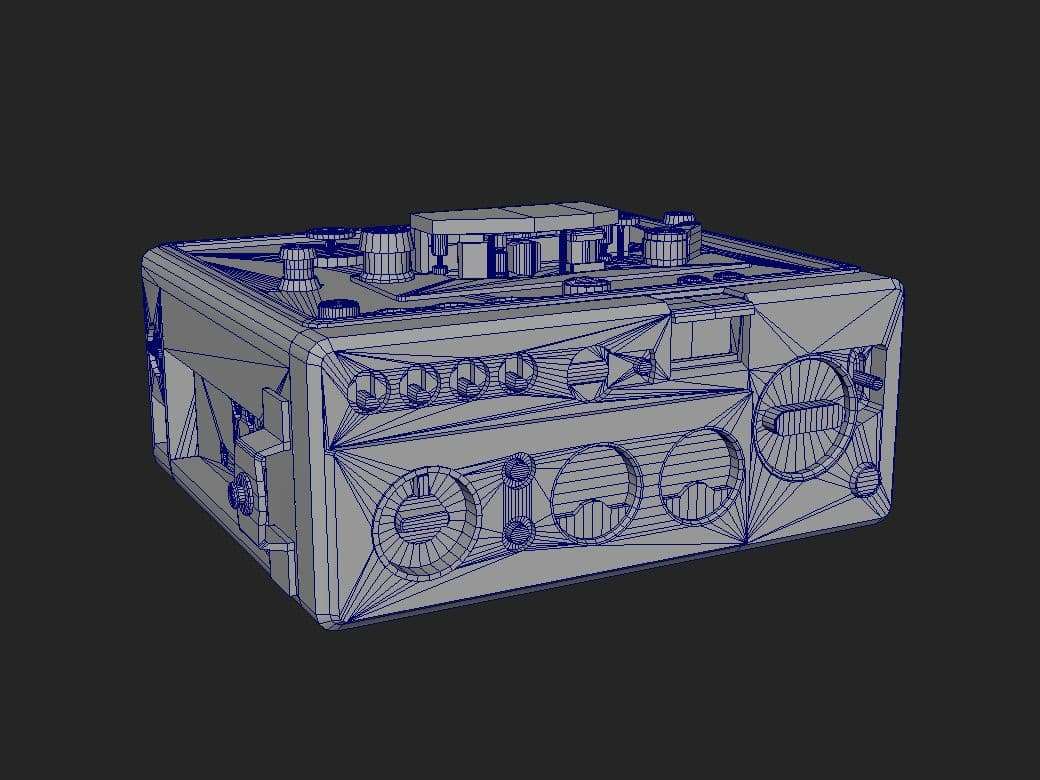
High Poly
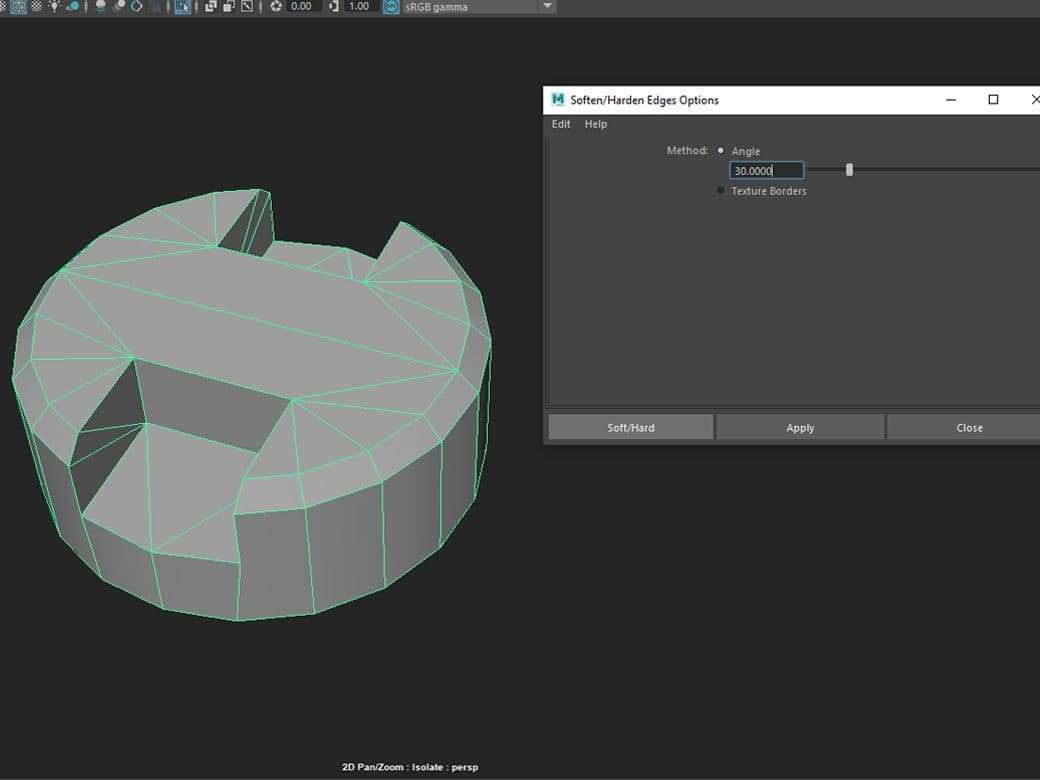
With the modeling stride done, I was set up to offset with the high poly. I used a Maya to Zbrush workflow and then I will bear witness you the steps yous need to be able to use this workflow. I'll first use equally an example, the magnet piece. The first pace is to do a "soft/hard" on the object to try and prepare the smoothing groups correctly.
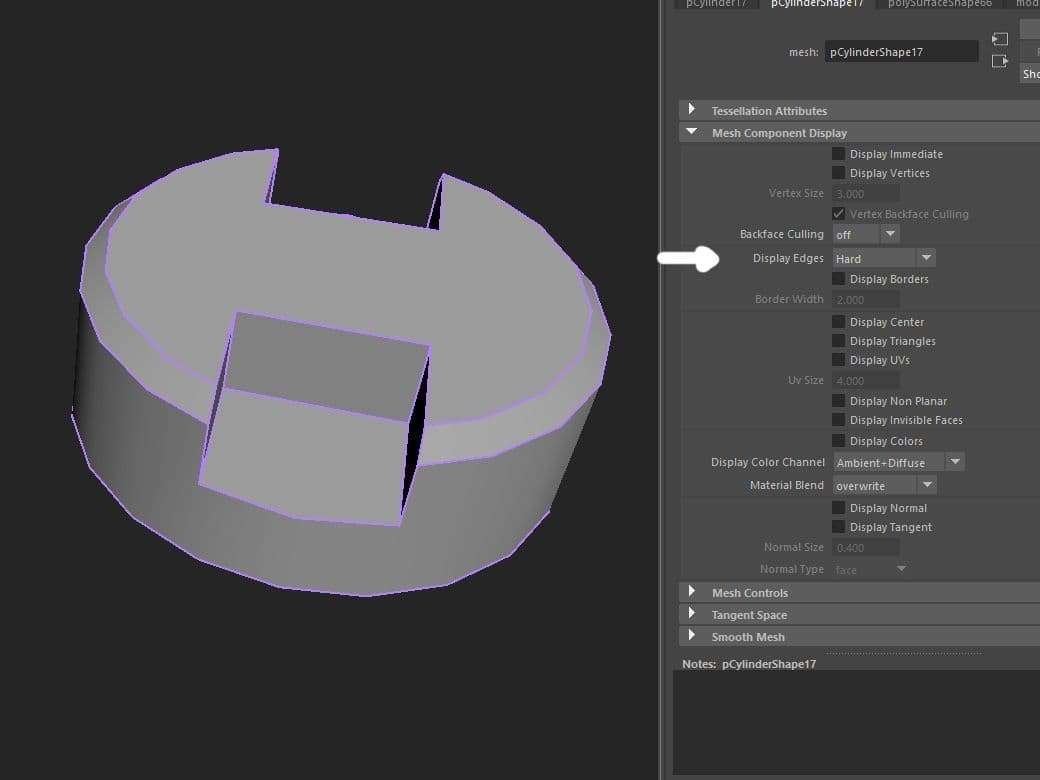
I then checked that the smoothing groups were set correctly, and for that you lot need to display the hard edges of the object.
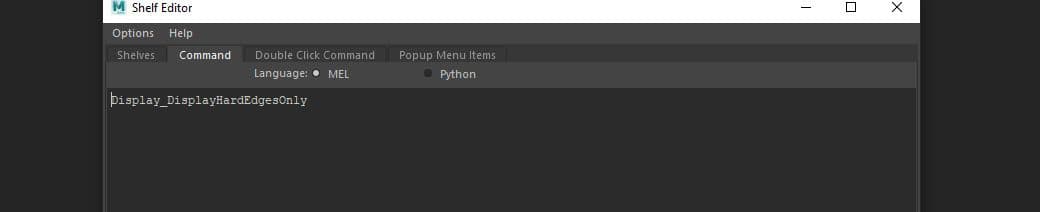
You can create a shelf push for it, just you demand ZHCG polytools for that. You can download it from here and these are the commands for the push:
"Display_DisplayHardEdgesOnly"
And for the double click that removes the display colour is: "Display_DisplayAllEdges"
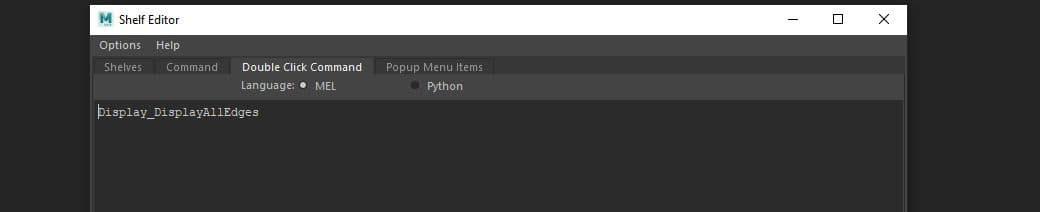
If the hard edges were incorrectly highlighted y'all just demand to click on the edges that were set incorrect and soften them. In one case you lot accept every smoothing grouping set correctly, y'all are gonna need to brand a uv out of every hard border. You tin can do that manually or you can apply this script for it:
polyProjection -type Planar -md p;
polyUVHardEdgesAutoSeams 1;
u3dLayout -res 256 -box 0 1 0 1;
And create a button for it.
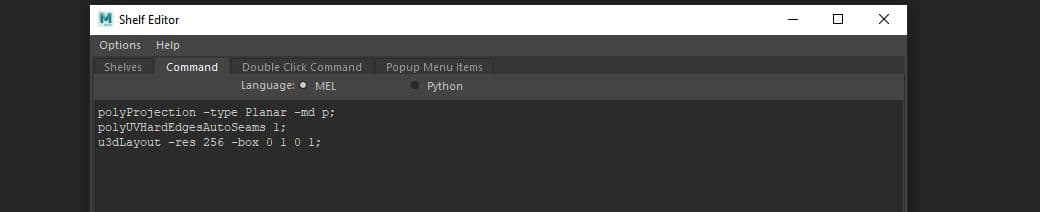
Select every face on the object and click the push button or run the script.
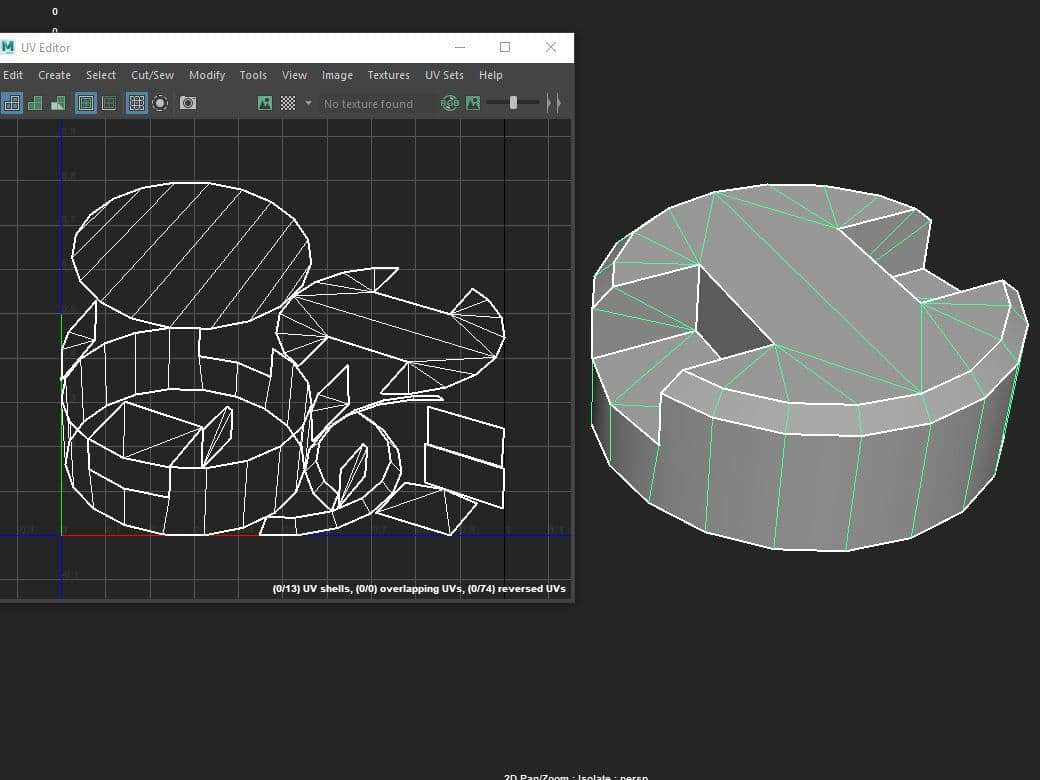
Later that you need to triangulate a version of your object, export it, and delete the triangulated version of the object from your Maya scene to proceed it clean. That's the object that will be taken into Zbrush.
In one case in Zbrush, use the autogroup with uvs function so that Zbrush separates the polygroups using the uvs that were fabricated earlier, and then dynamesh it.
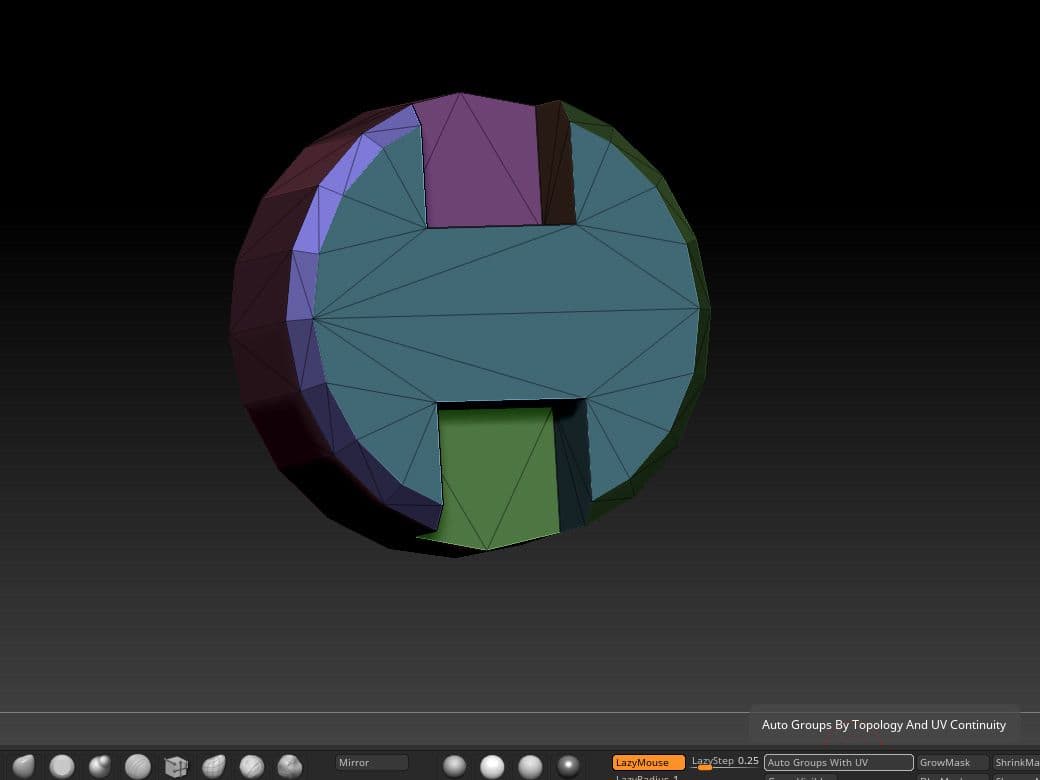
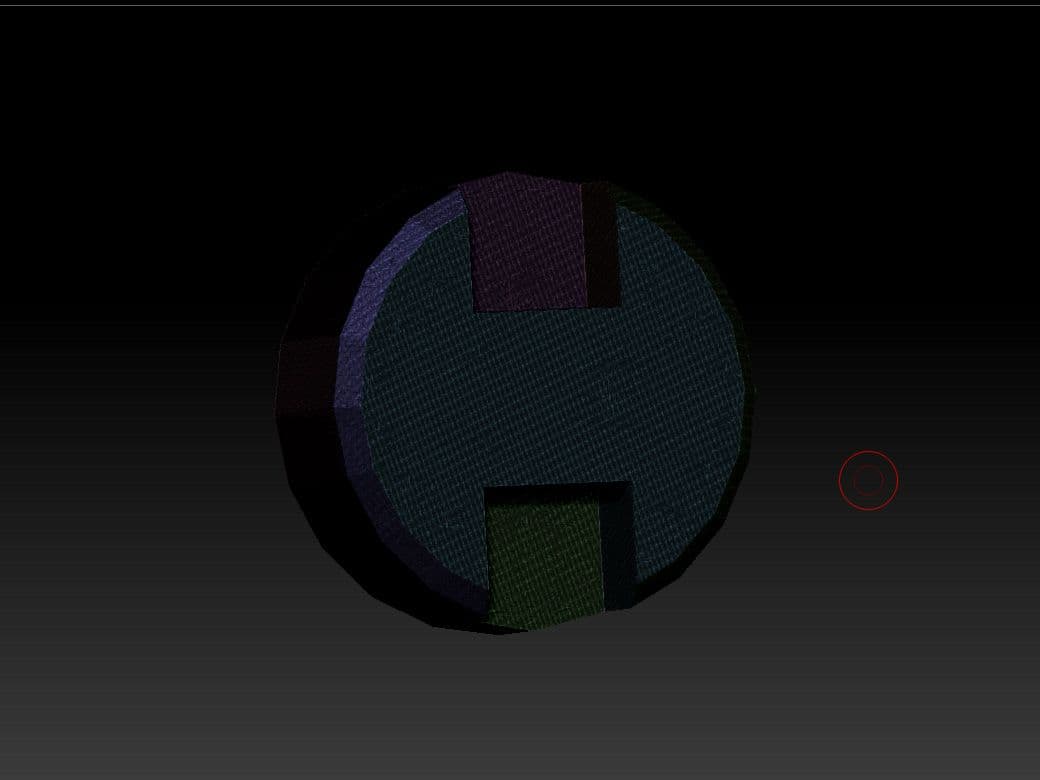
Use the polish by features function with the dot in the center until you take a polish object.
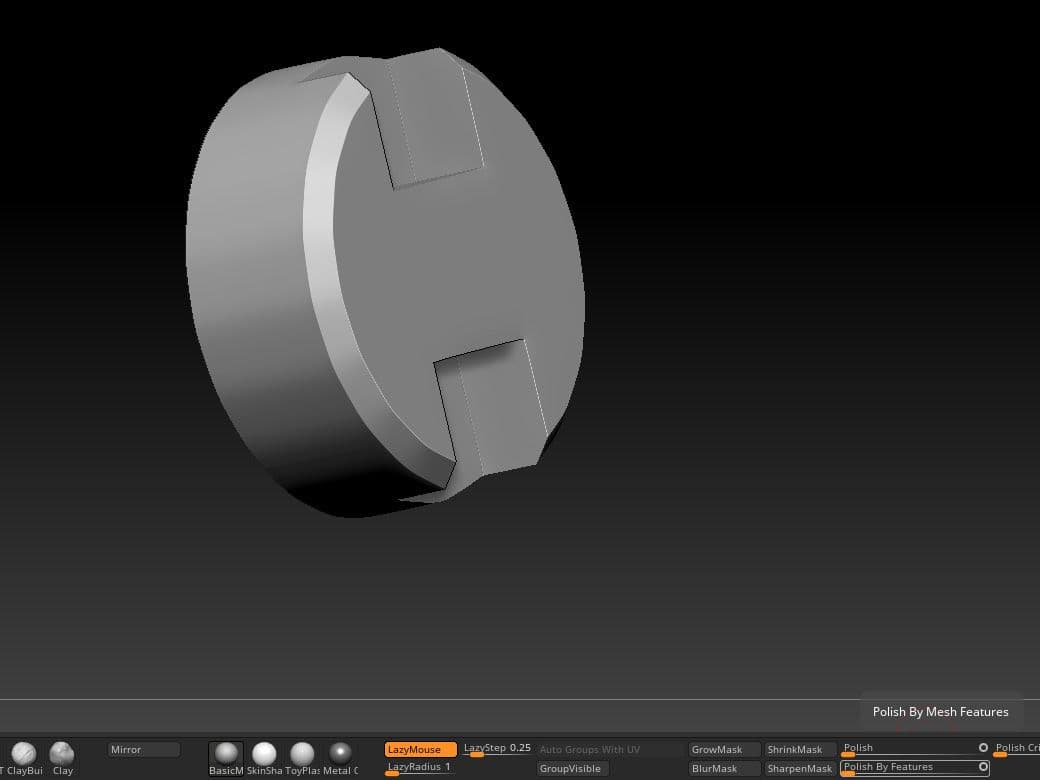
Then use the mask by features with only groups selected, and grow and sharpen until you get the desired bevel size. Then, capsize the mask and apply the smooth function without the dot in the middle until you lot go the desired bevel.
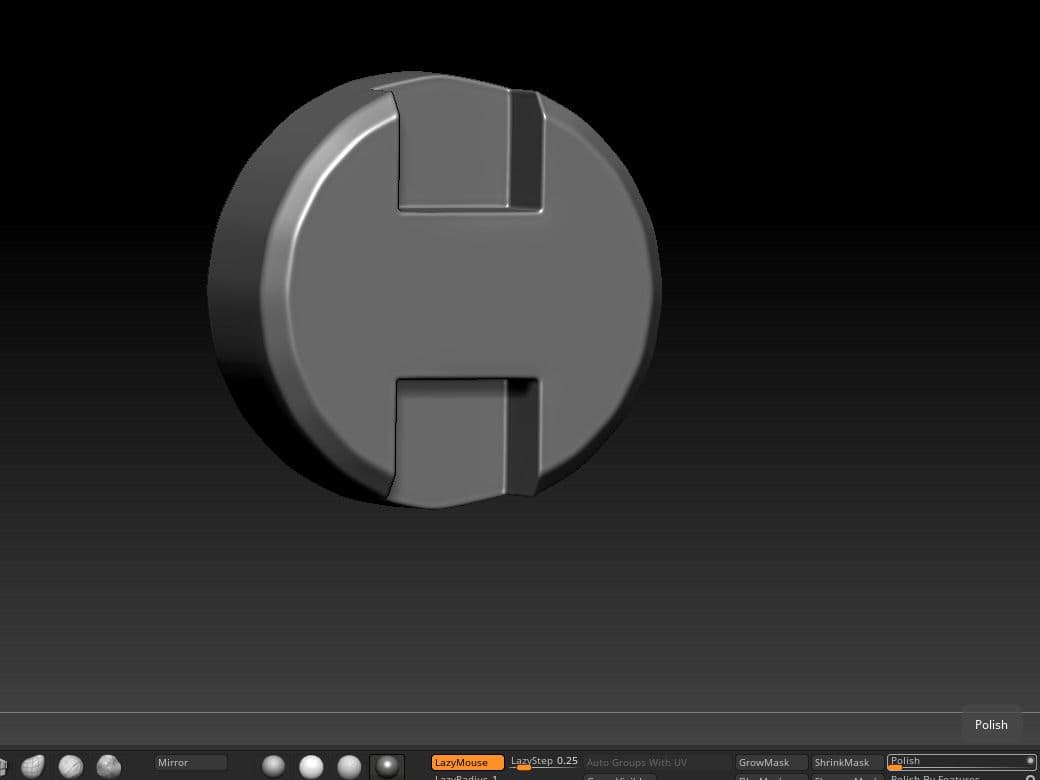
That way, yous now have a loftier poly version of the object yous started with. Now you need to echo that process with the residue of the objects that require it.
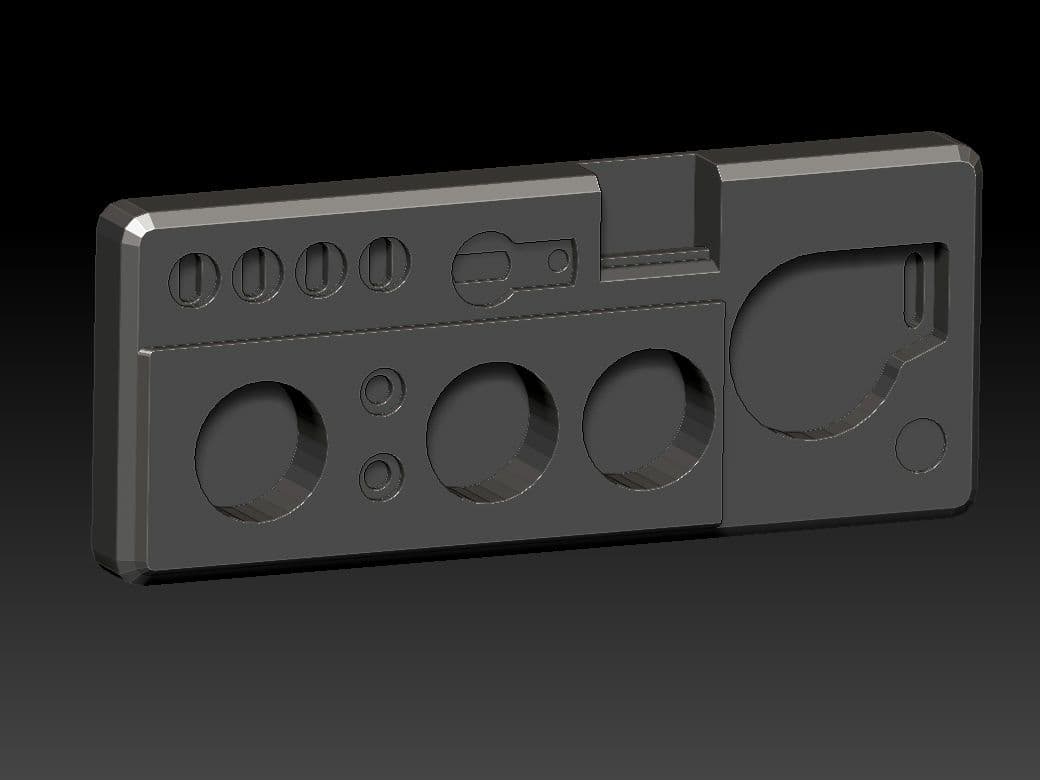
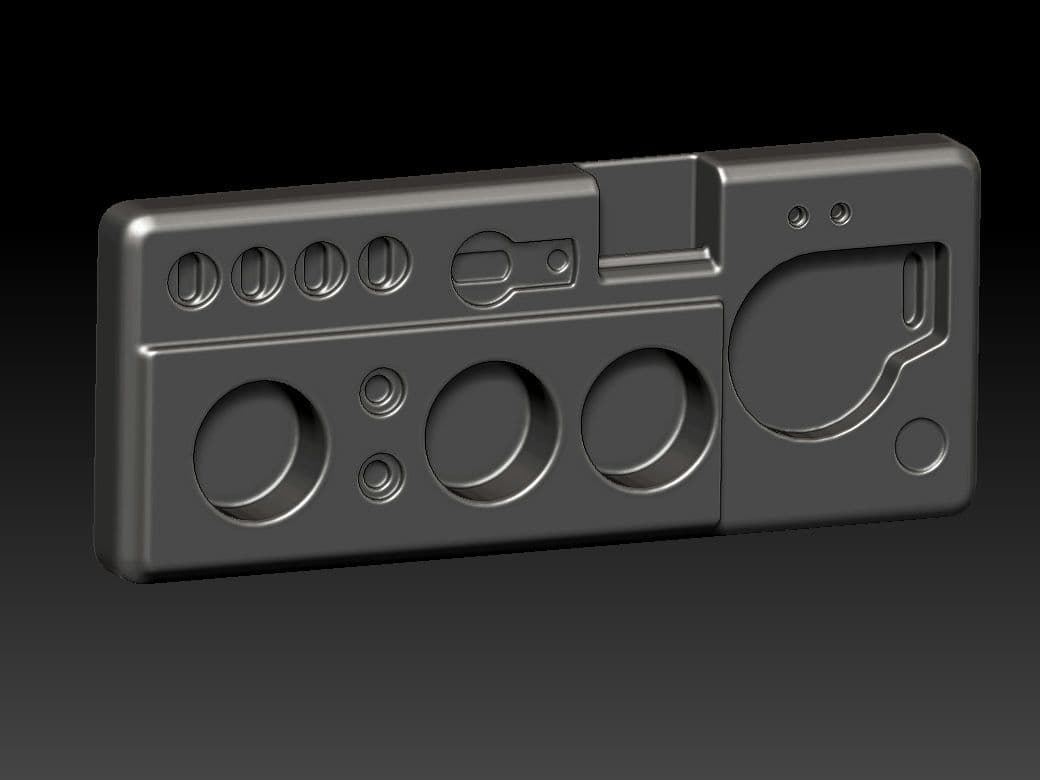
If you are happy with the high poly that y'all have, it's time to take it back to Maya. For that yous need the decimation master function in Zbrush. First, you pre-procedure electric current.
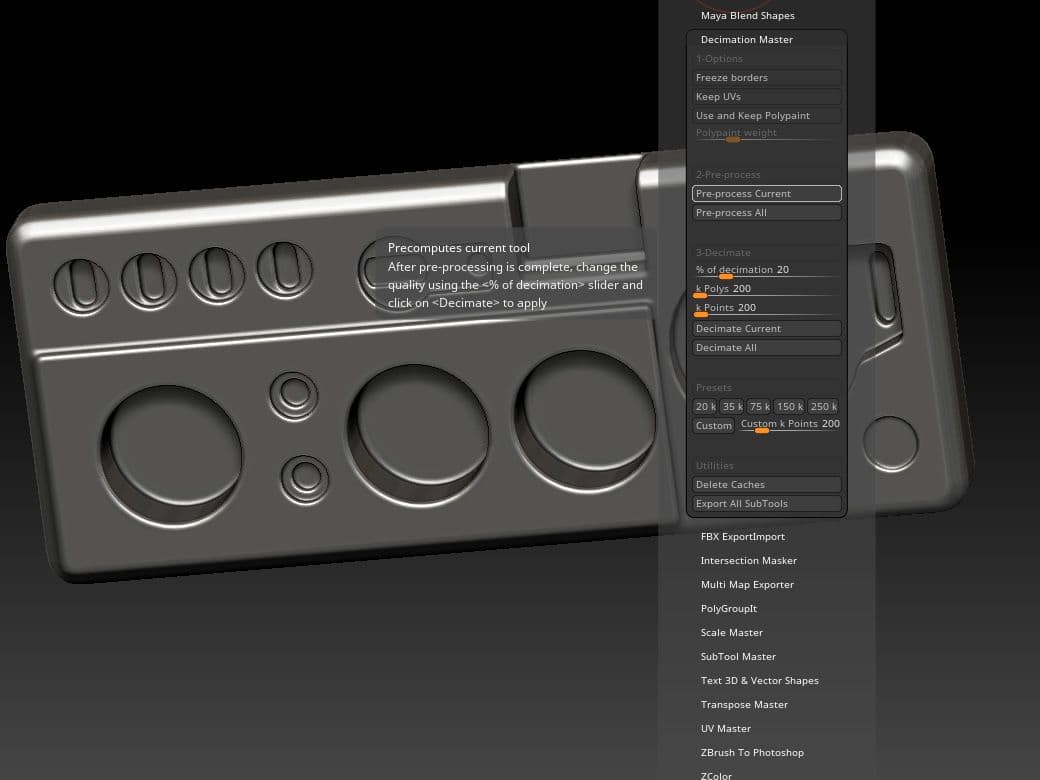
And after the pre-process is over, you then proceed to decimate the object you have with the percentage you desire. The percentage you choose will depend on how of import the piece is to the overall object.
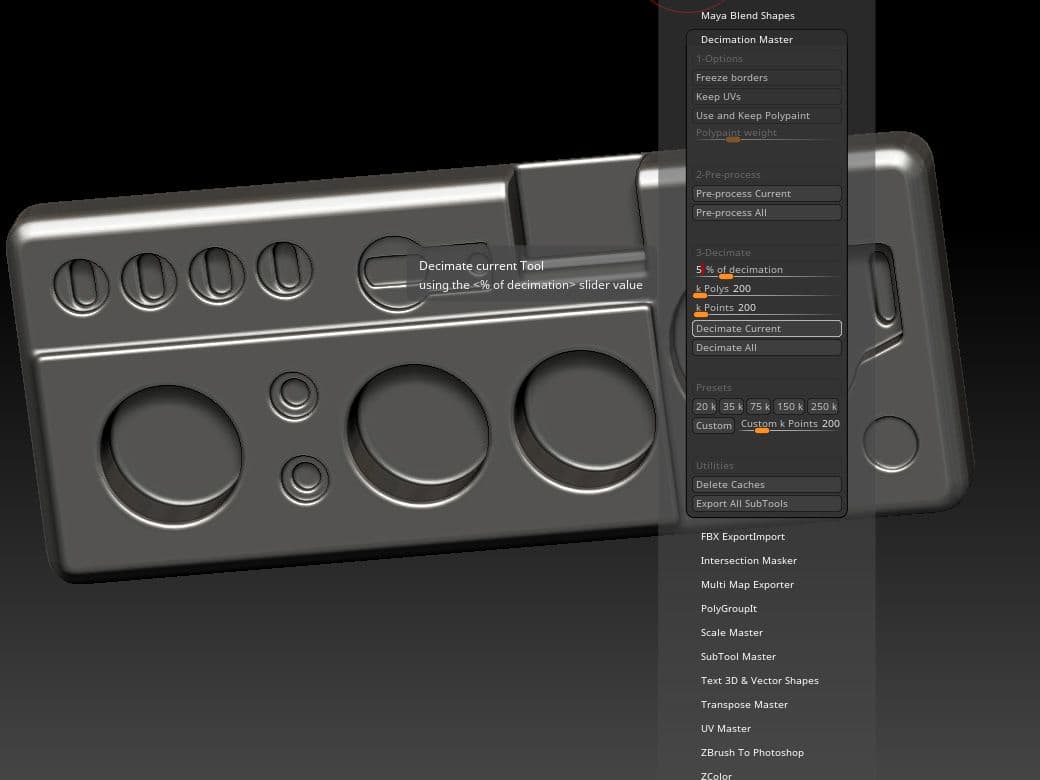
And this is the decimated object that you are going to be taking back to Maya:
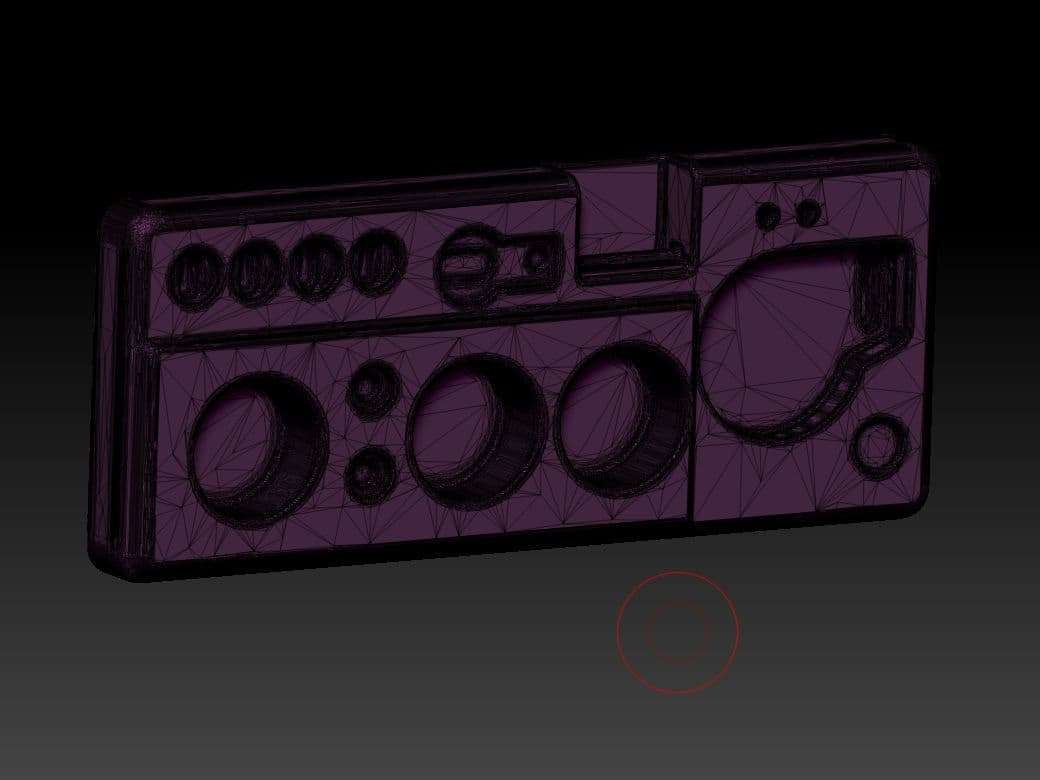
Now in Maya with your high poly, it's fourth dimension to start with the low poly.
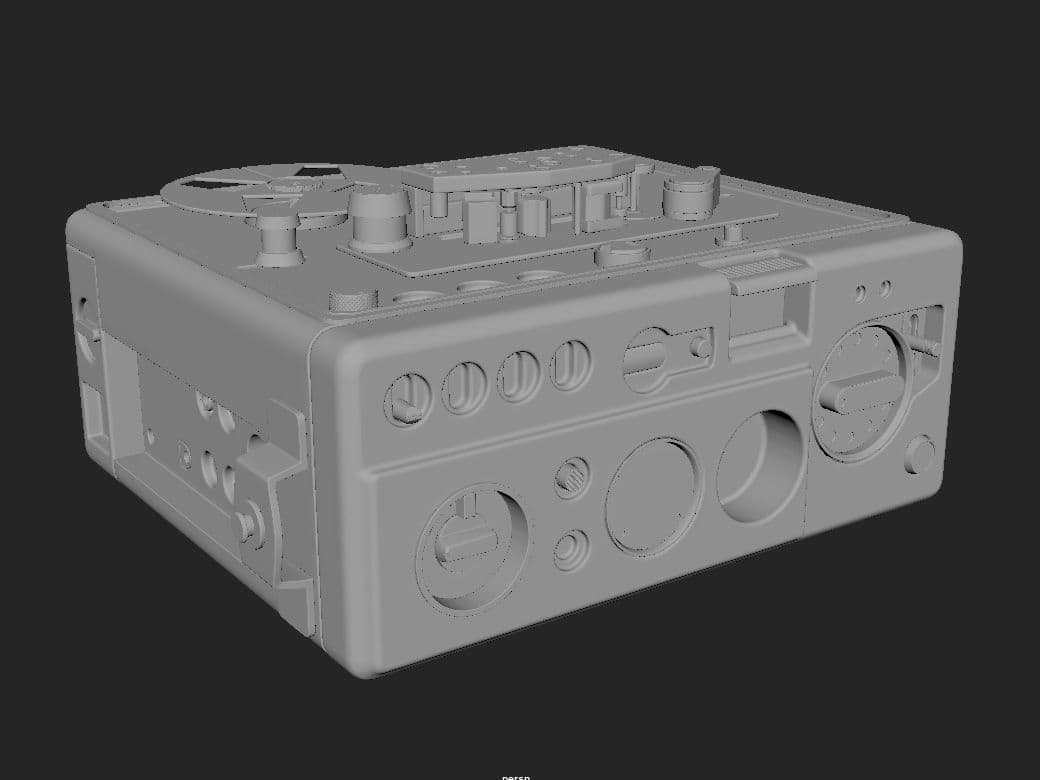
Low Poly and Uvs
One time back in Maya with the decimated loftier poly, remember to keep it in a separated layer, the modeling mesh in another, and a third layer for the clean low poly.
The depression poly is pretty straight forward. Yous just need to observe your mesh and see which edges you don't need, and offset merging and deleting the ones that are actress. Too start thinking of which meshes could exist repeated and so you tin can also get rid of those.
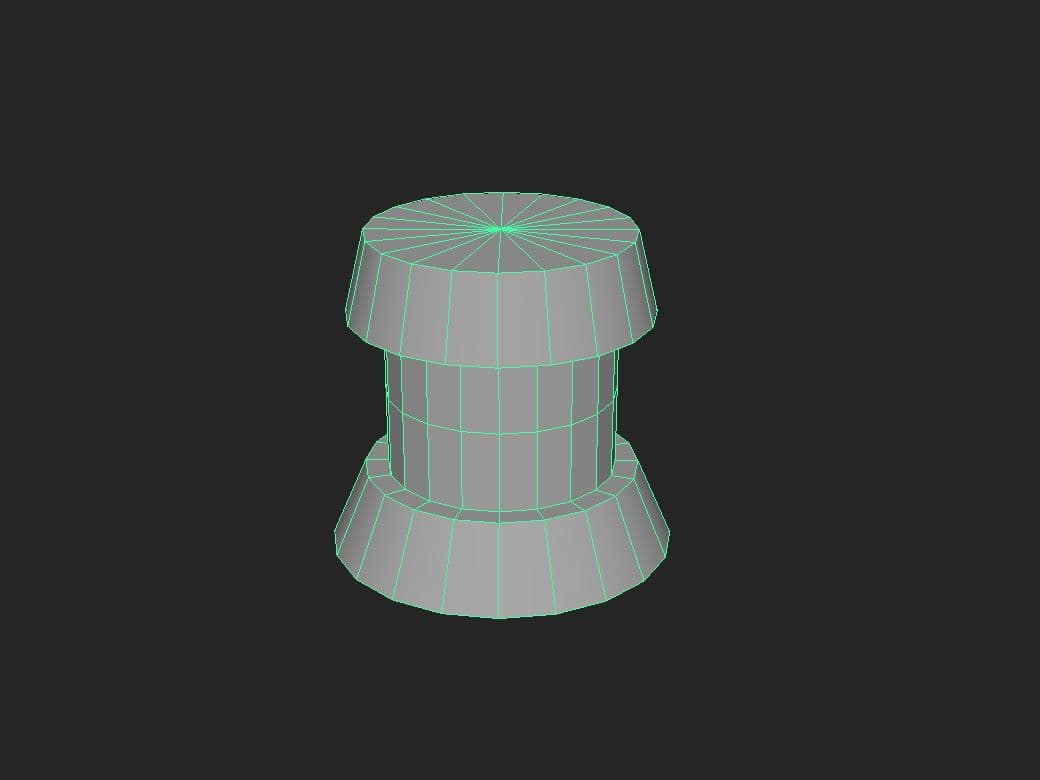
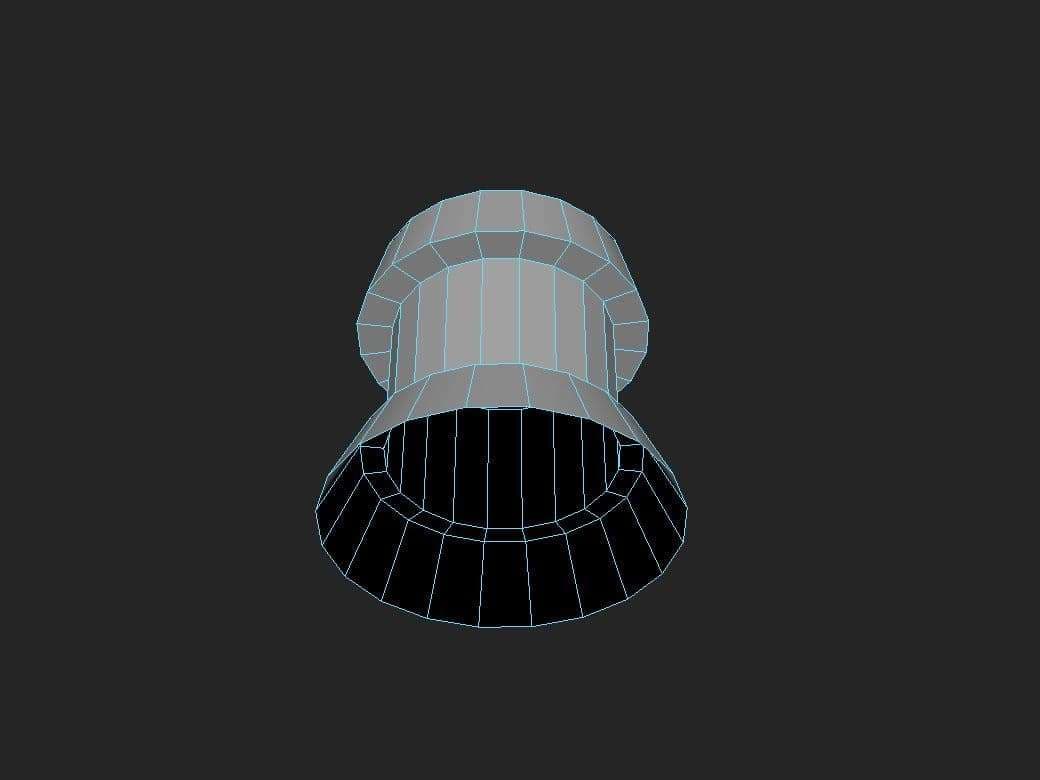
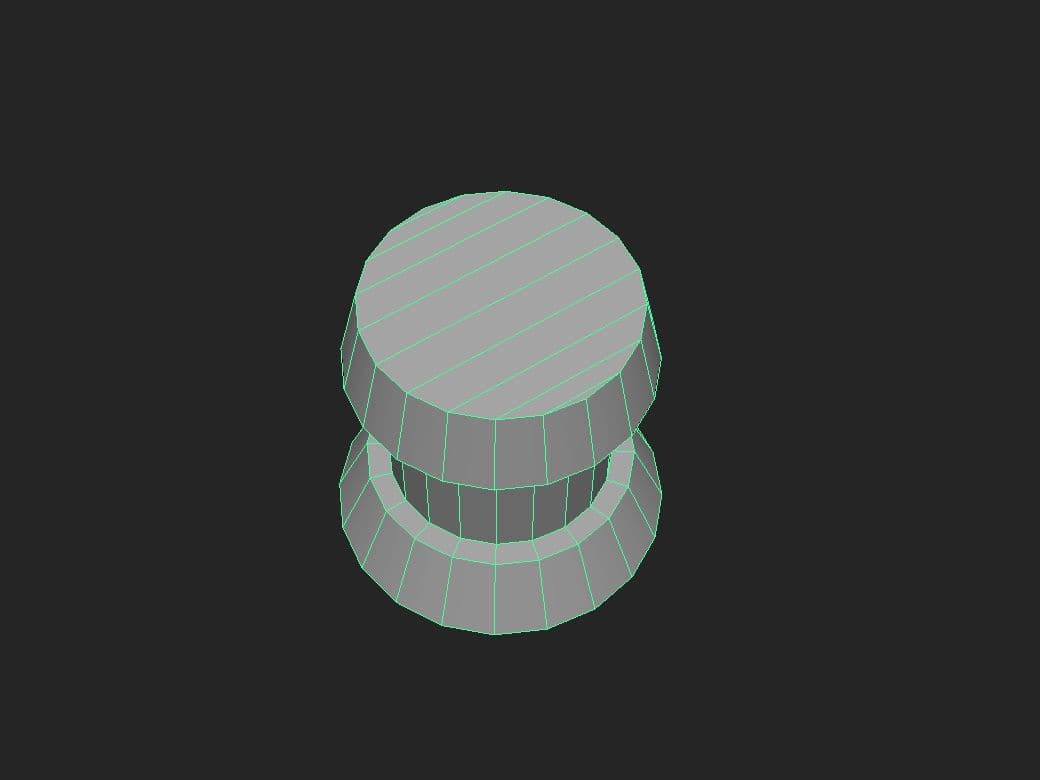
If you are never going to see the lesser faces you can delete them.
After that, yous can starting time doing the Uvs on the piece. Uvs are also a picayune bit tedious, but with some music and decision you tin can finish them really quick!
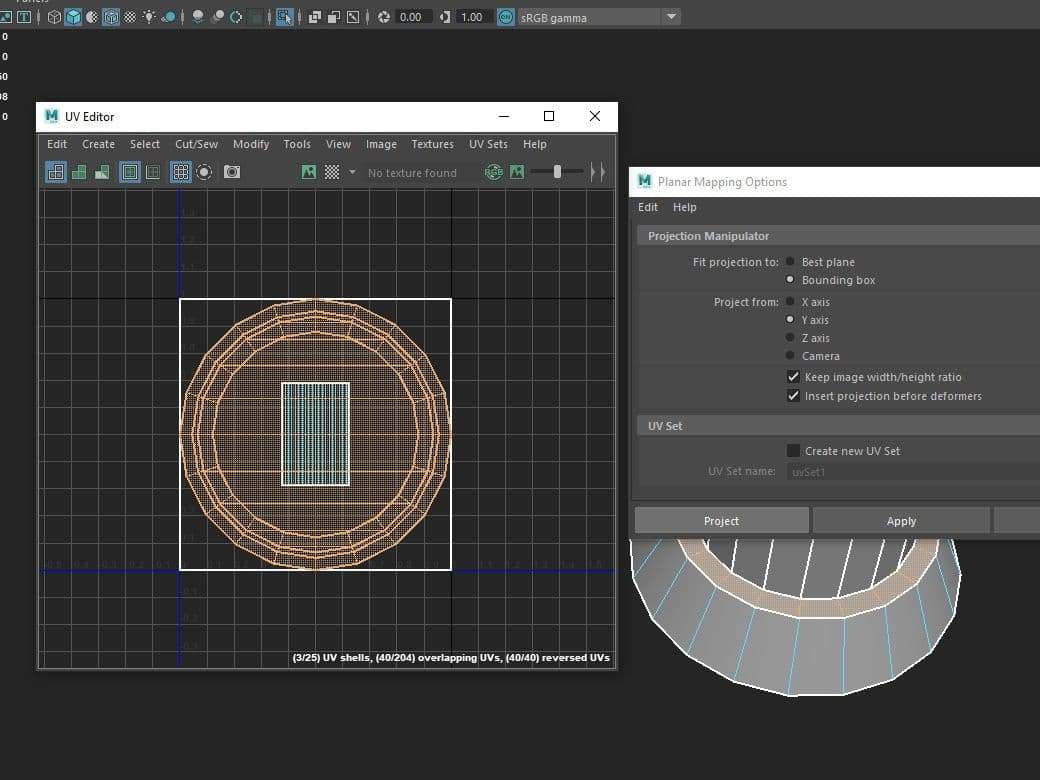
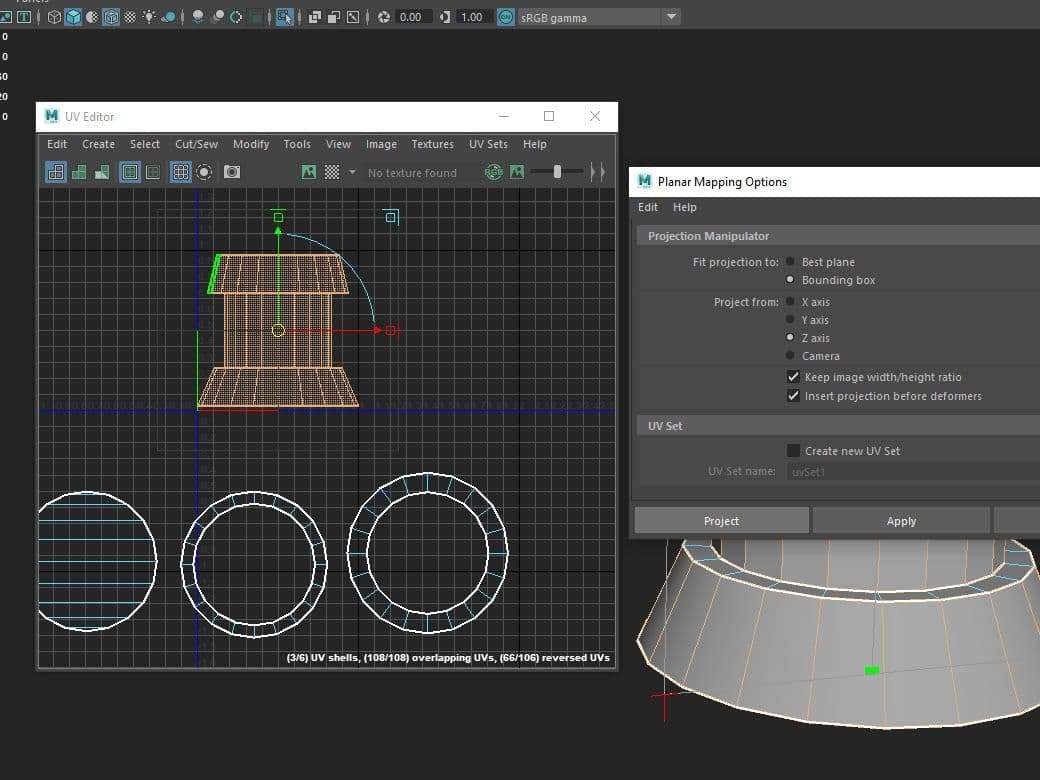
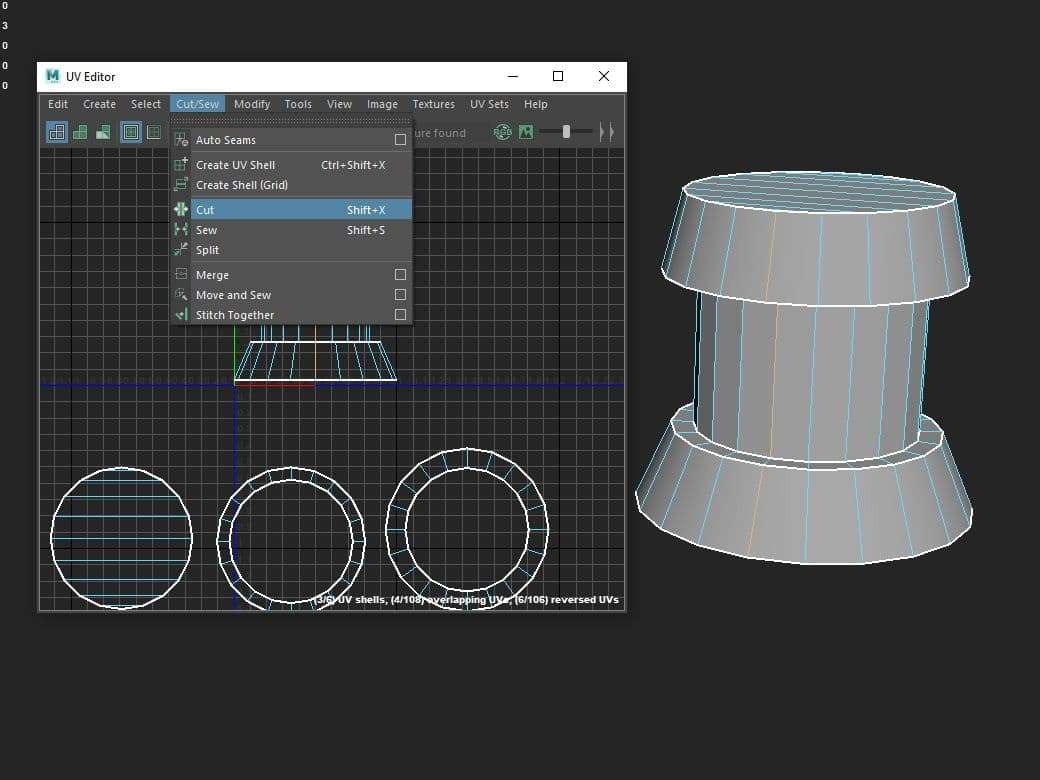
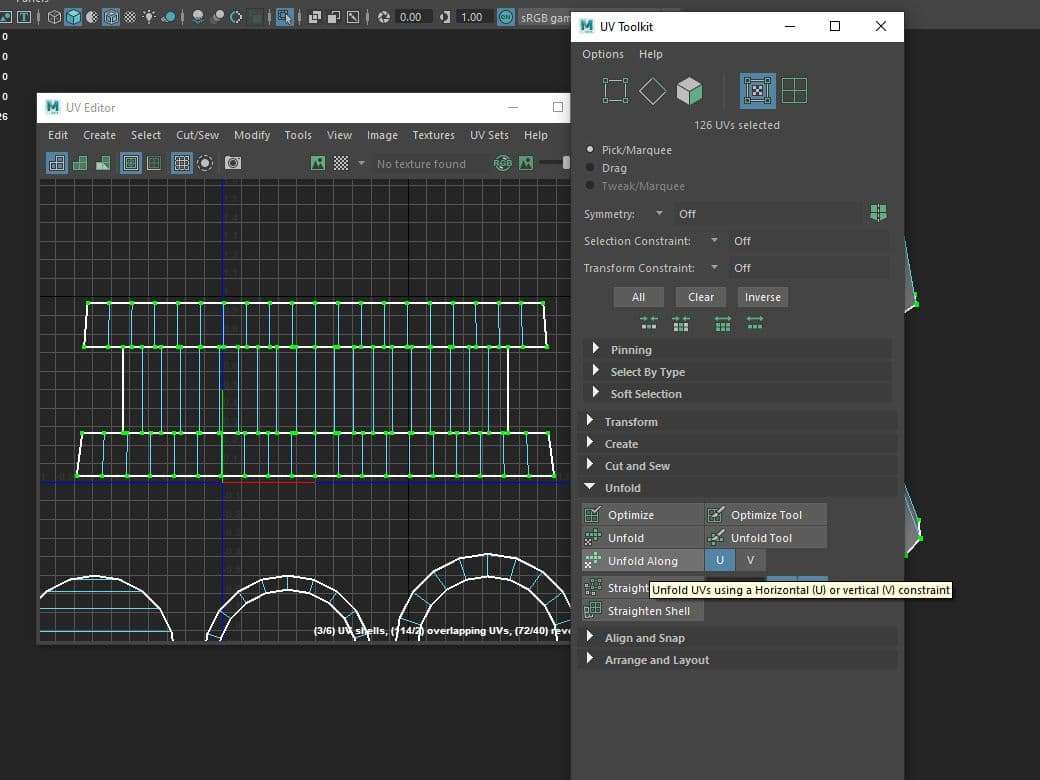
For games, it's really important for UVs to exist directly. For that you tin apply the align tool in the uv editor.
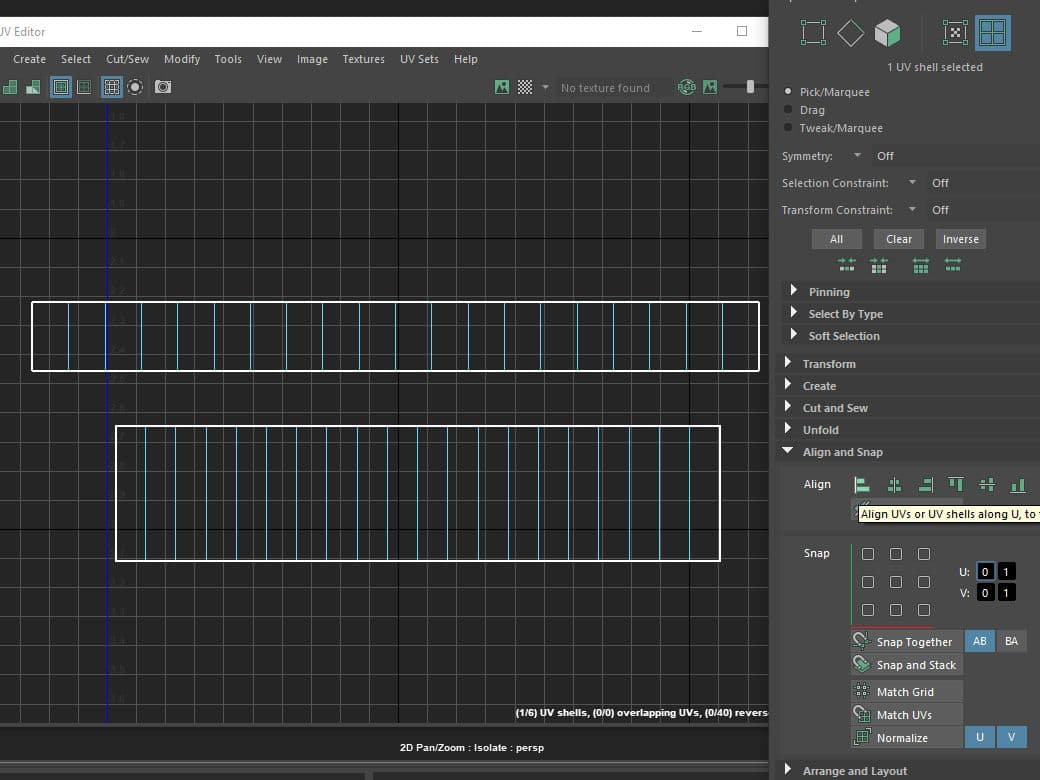
And with that process you are gonna optimize every piece until you lot are done with the full low poly version of the object.
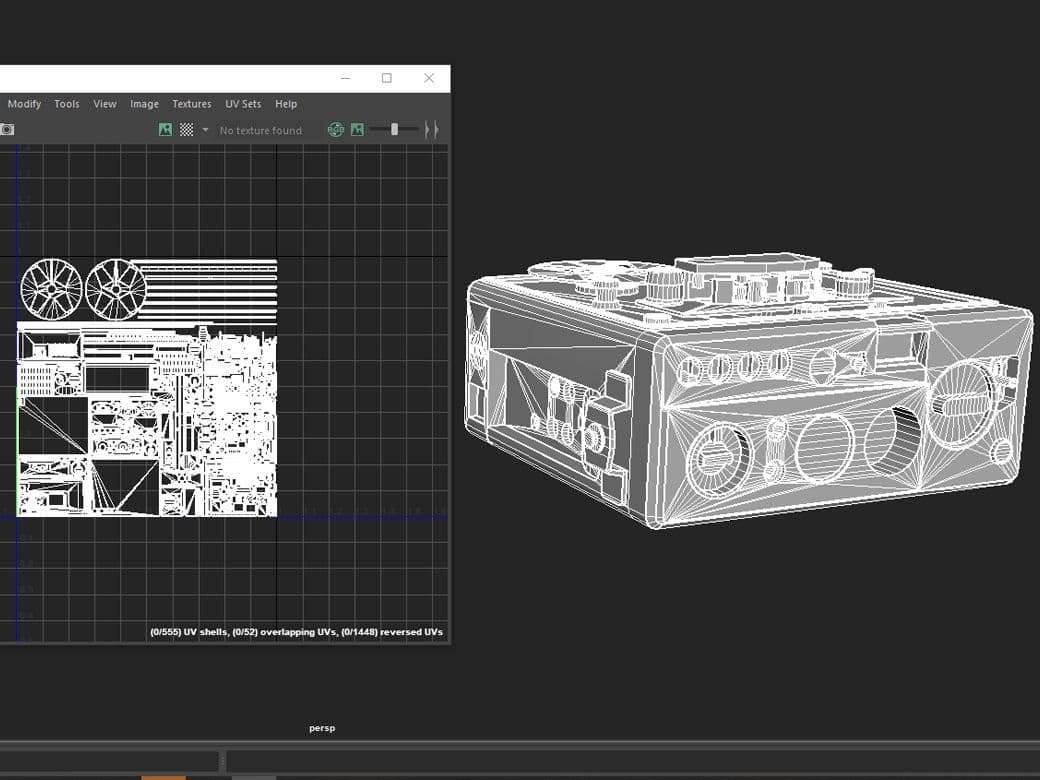
Once you have all your meshes with uvs, information technology'south time to get-go naming everything. Also, at present that you lot have the high and the low poly in the aforementioned scene, it's time to get rid of everything else to keep the scene clean. You tin now delete all the carving objects, and even the modeling pieces since yous already have the clean version. The skillful affair almost saving incrementally is that if you always make a fault and desire to go back, yous tin easily open an older file.
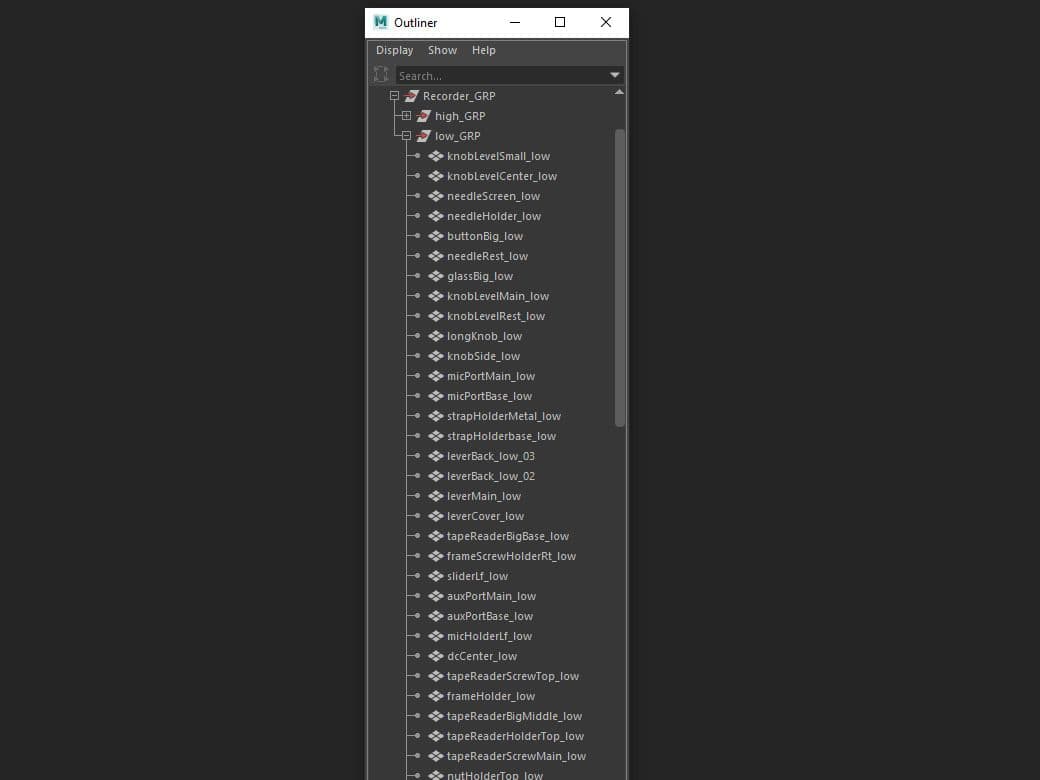
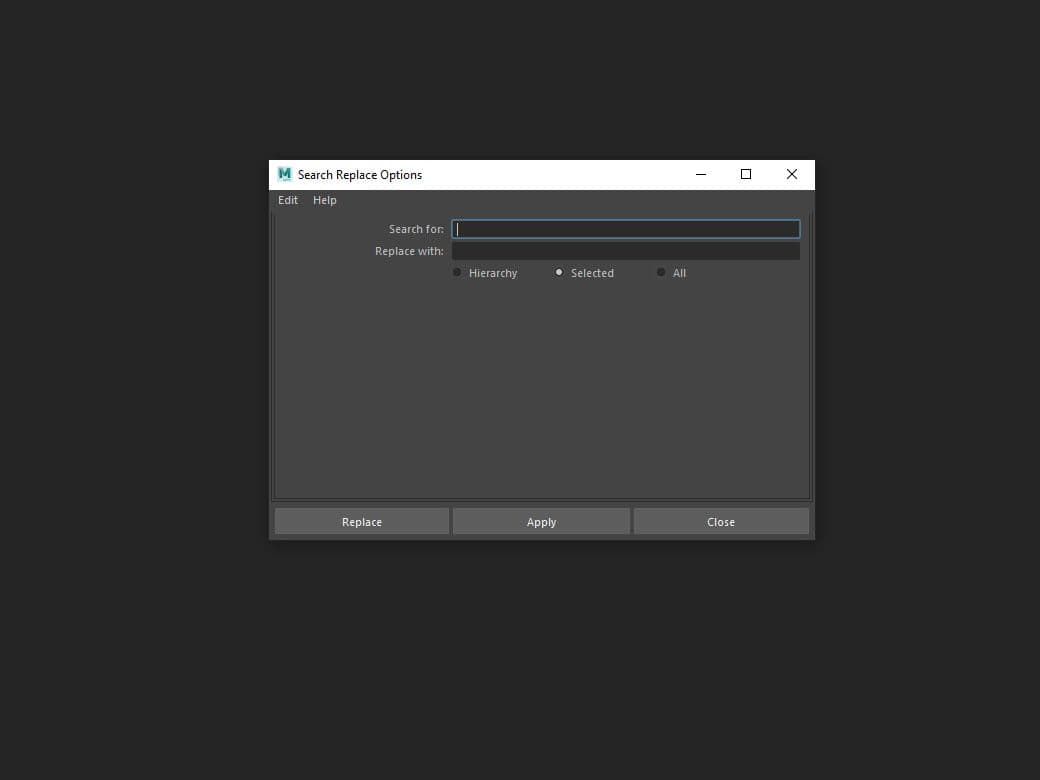
A good tip I can give you about the naming process, is that you e'er name every piece in the low poly, and so merely copy and paste the name into the high poly. I used to name them at the same time and used to take twice as long, so don't brand the same mistakes I did. Remember you tin use the search and replace role if you have multiple objects that are supposed to bake into the aforementioned _low version.
Baking and Texturing
Now that we are done with uvs and low poly, you are set to go into baking. The blistering stride is more than of a problem solving stride more than anything. It's where you lot will realise if you lot take misplaced uvs, wrong topology, or if you are in demand of some supporting edges.
With regards to texturing, have fun and experiment. Effort to imagine what y'all remember happened to the object and build it from at that place.
I decided to do the baking in substance painter. Before I went into substance painter for the baking, I added a different colour to the dissimilar parts to the high poly. This style I could separate the materials once in substance painter.
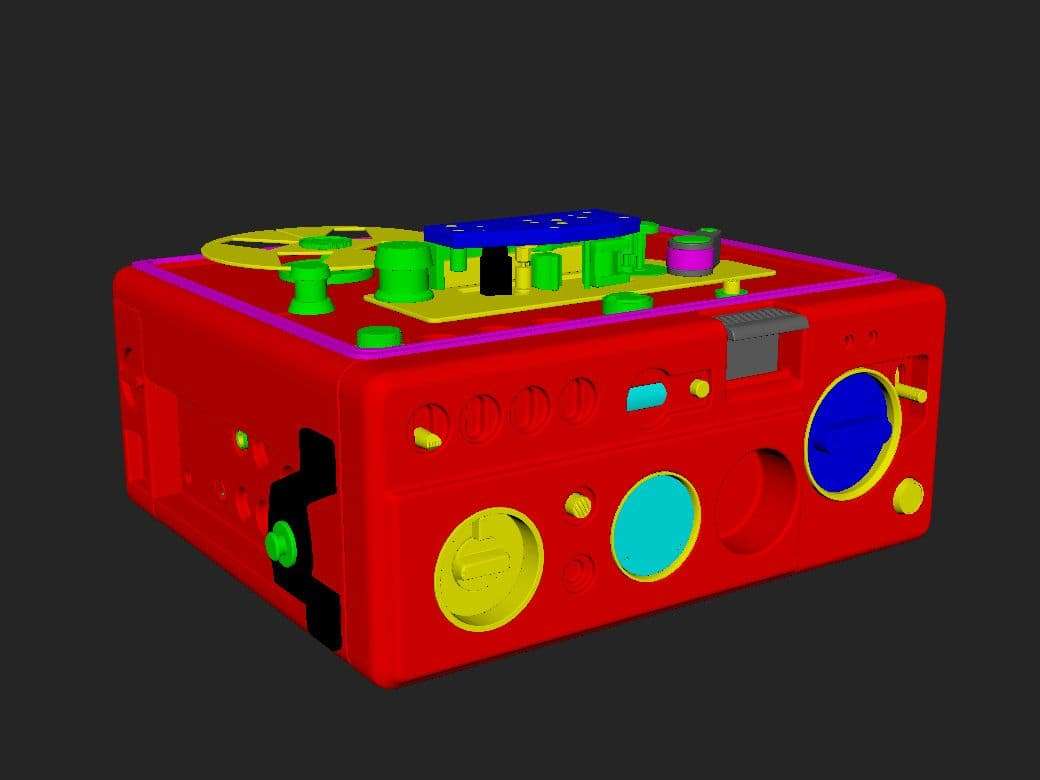
Now in Substance Painter these were my settings for the baking:
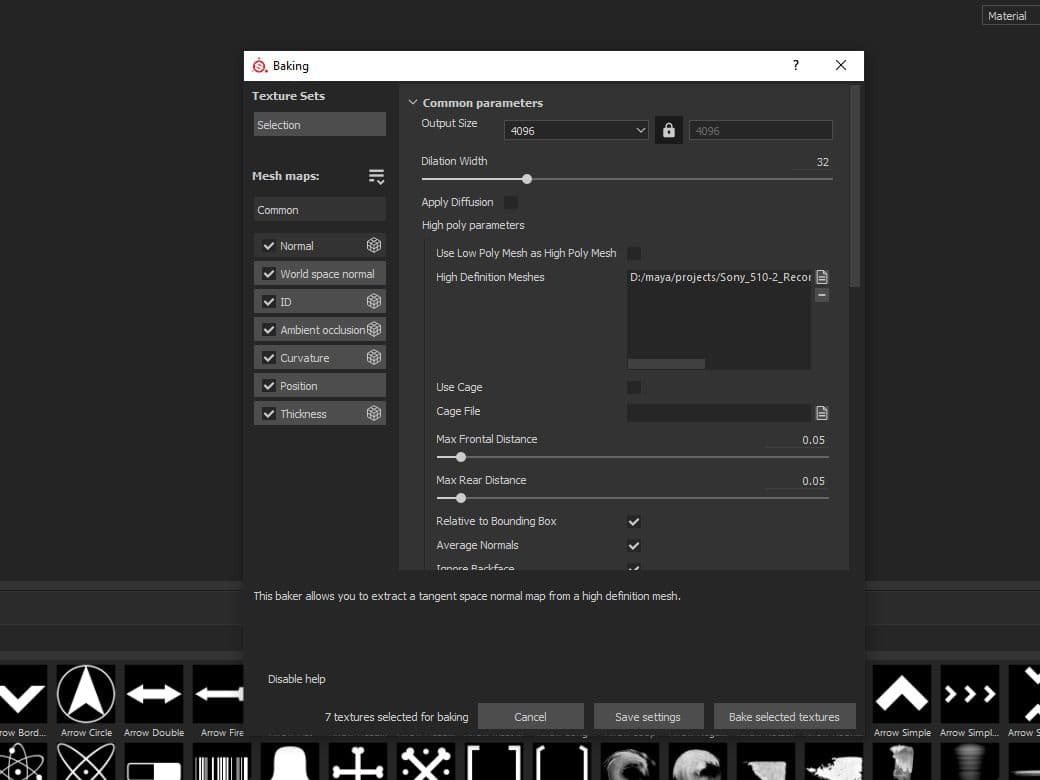
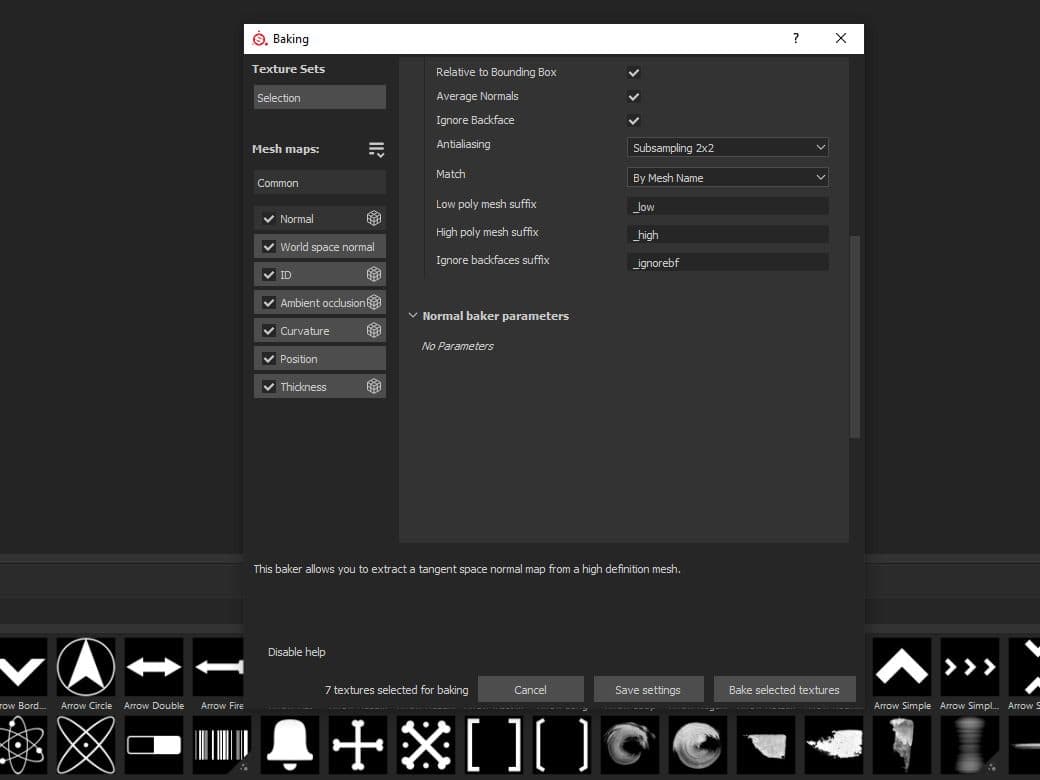
For the ID call back to utilise "Material Color". For "ambience occlusion" and "thickness" crank them up to 128 for the final bake, and with that the baking is done.
Remember how I said modeling was the nearly fun out of everything? Texturing is also up at that place. With my recorder I decided to become for a really used one - in my imagination the recorder had been sitting in a corner and gathering grit and dirt. So with that in listen, I started with the base main cloth and started working from there.
The main tip I tin give yous in regards to texturing is to have fun and experiment. Try to imagine what y'all recollect happened to the object and build information technology from there.
Likewise for the text and decals, which I think are really fun, create a separate layer just for them, and group it. This way you tin can create some wear upshot just for them.
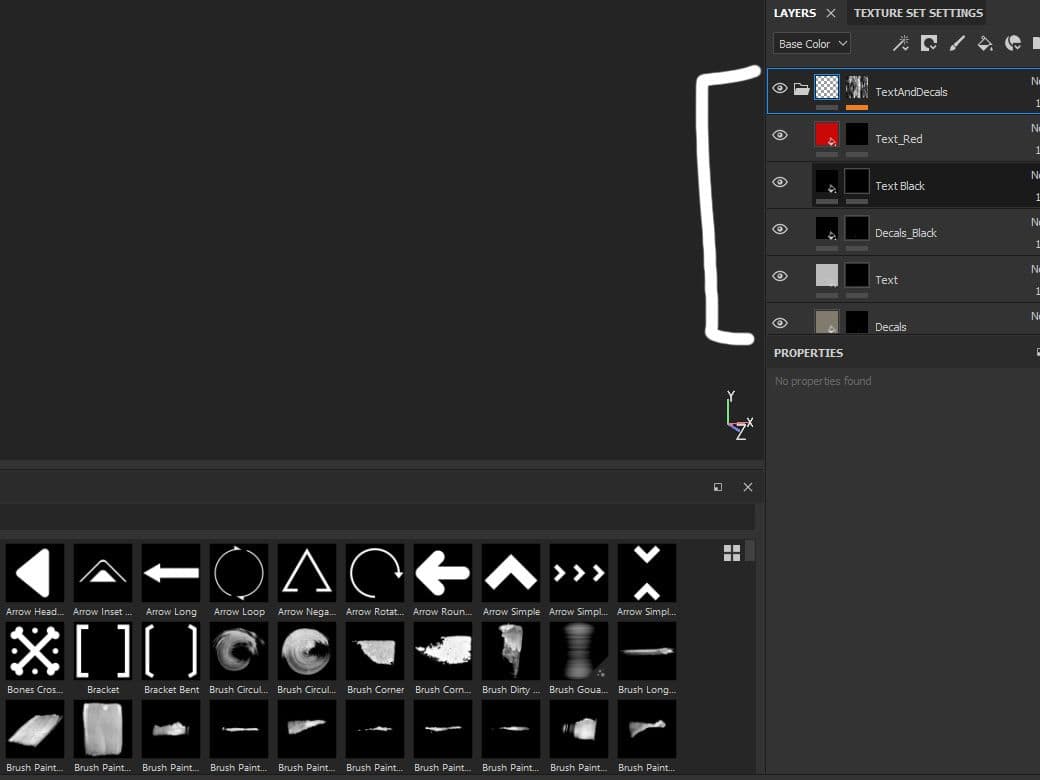
For the lines and signs on the object I used a combination of the basic hard brush and multiple effigy alphas. For example for the label. I used the square alpha to brand the main shape. I subtracted with a circle, the pointer, and the bones castor to make the shapes, and then subtracted with the type castor to add the text.
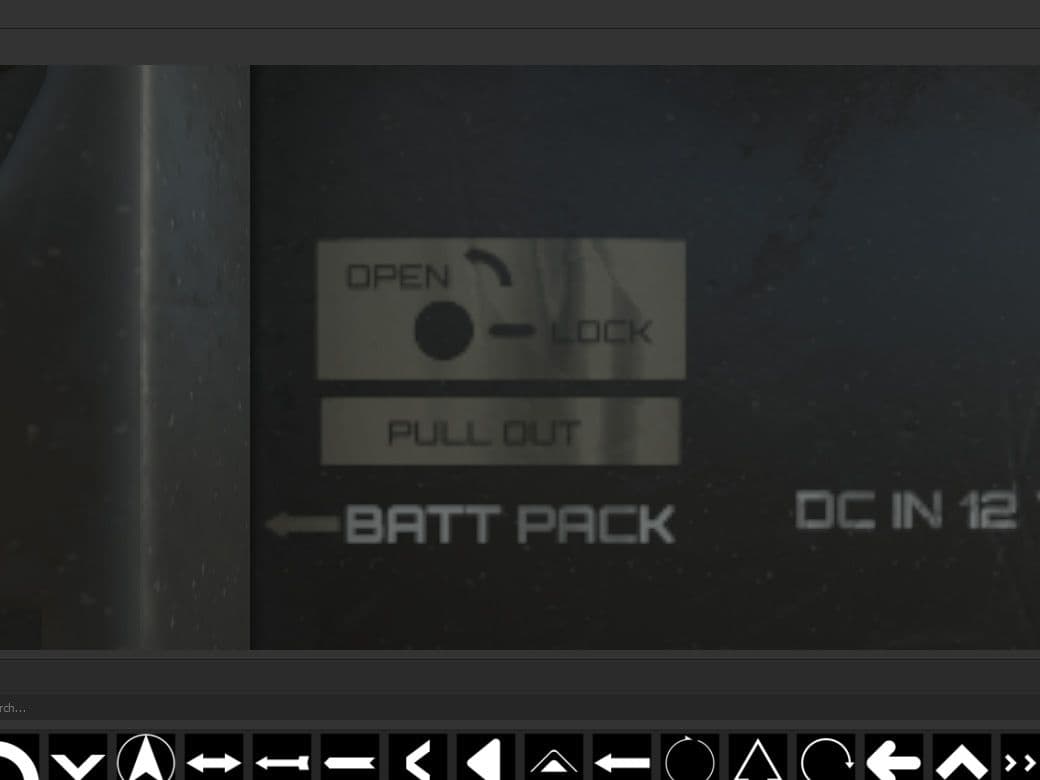
For the Sony logo, since it is a well known logo, I merely decided to search for a PNG of information technology. In Photoshop I gave it a black background, and kept the messages white so I could utilize it as an alpha. So I imported it into Substance Painter. Drag it into the primary shelf, and this window will popular up.
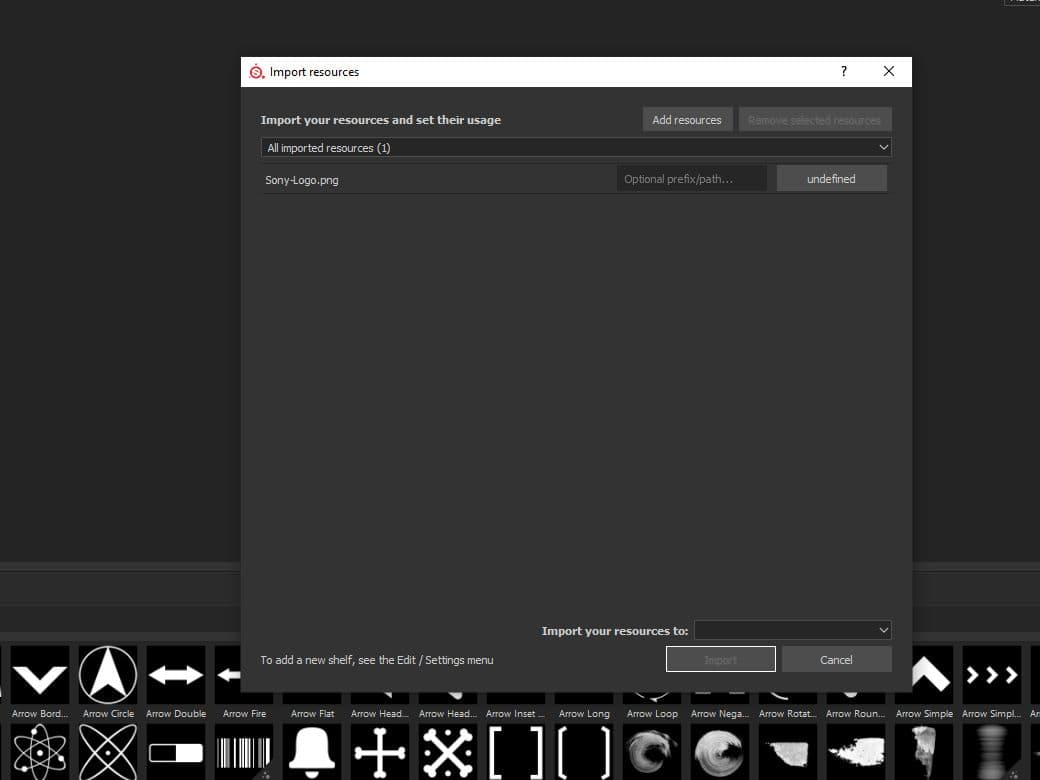
Modify the blazon to alpha.

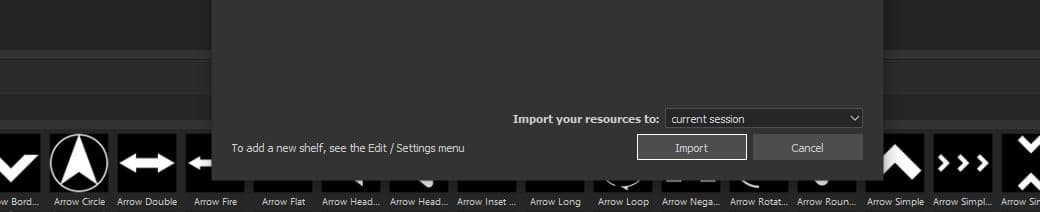
And and so click either current session or current projection (I usually get out it in the project.)
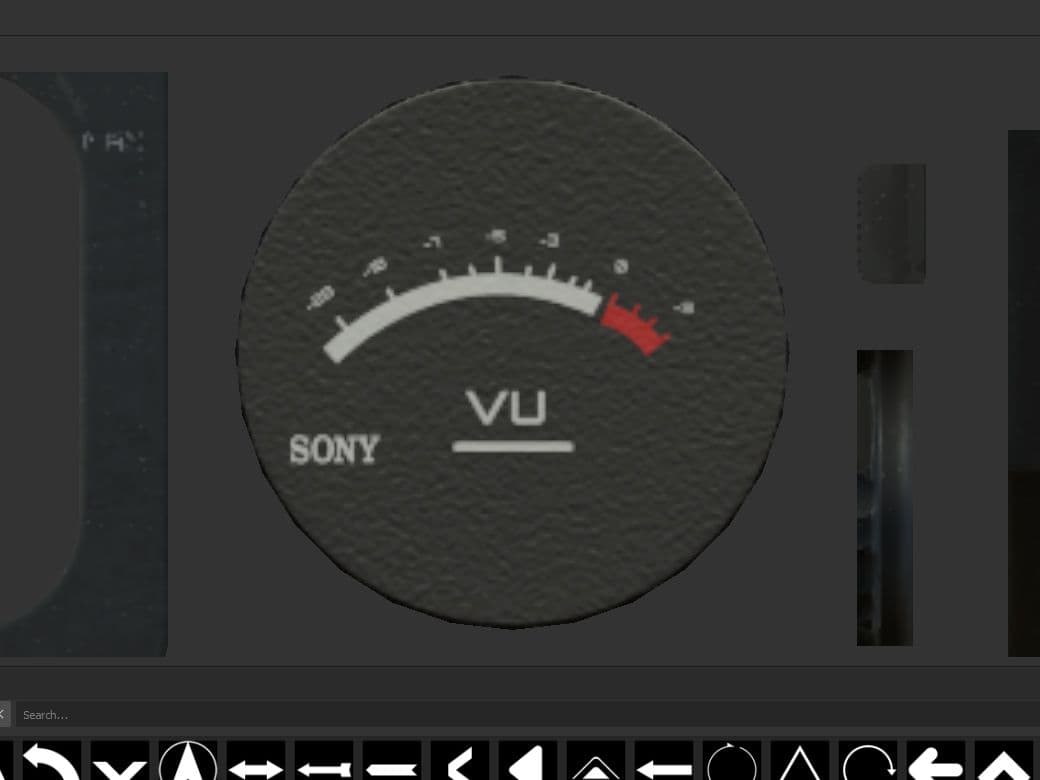
Another way you can use alphas is by creating your ain in Photoshop. That'due south what I did for the VU meter. I created 2 simple curved lines and added them into the layers I wanted them to bear upon.
This ane goes into the white decals layer:
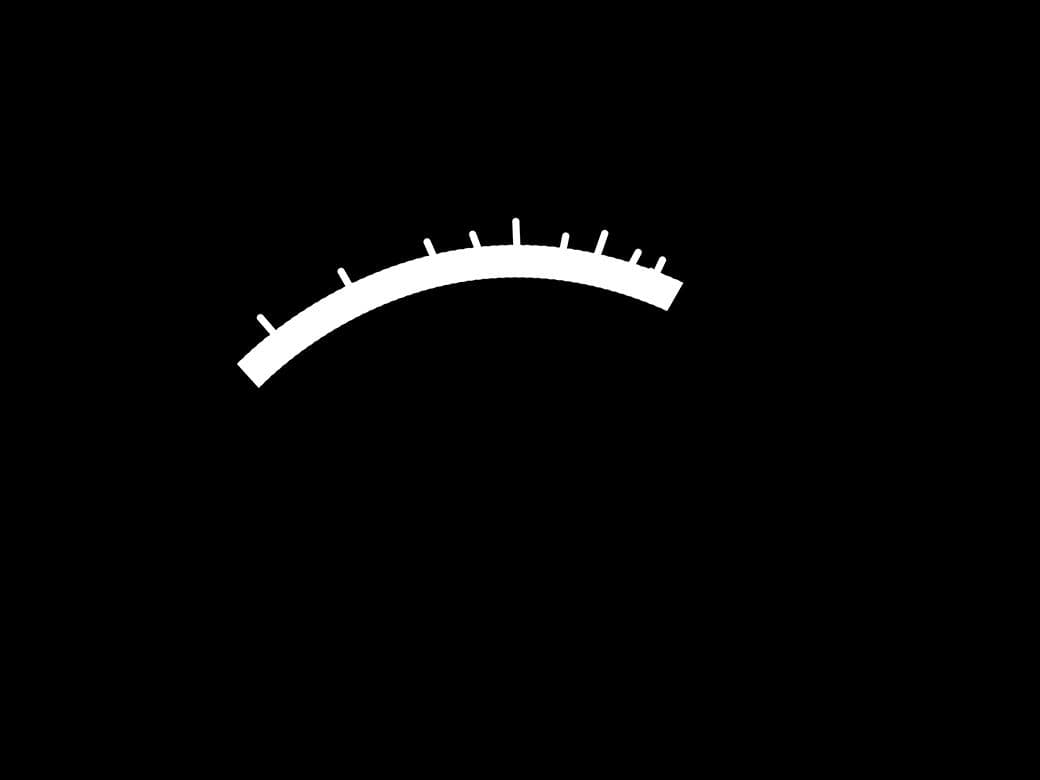
And this one into the ruby decals layer:
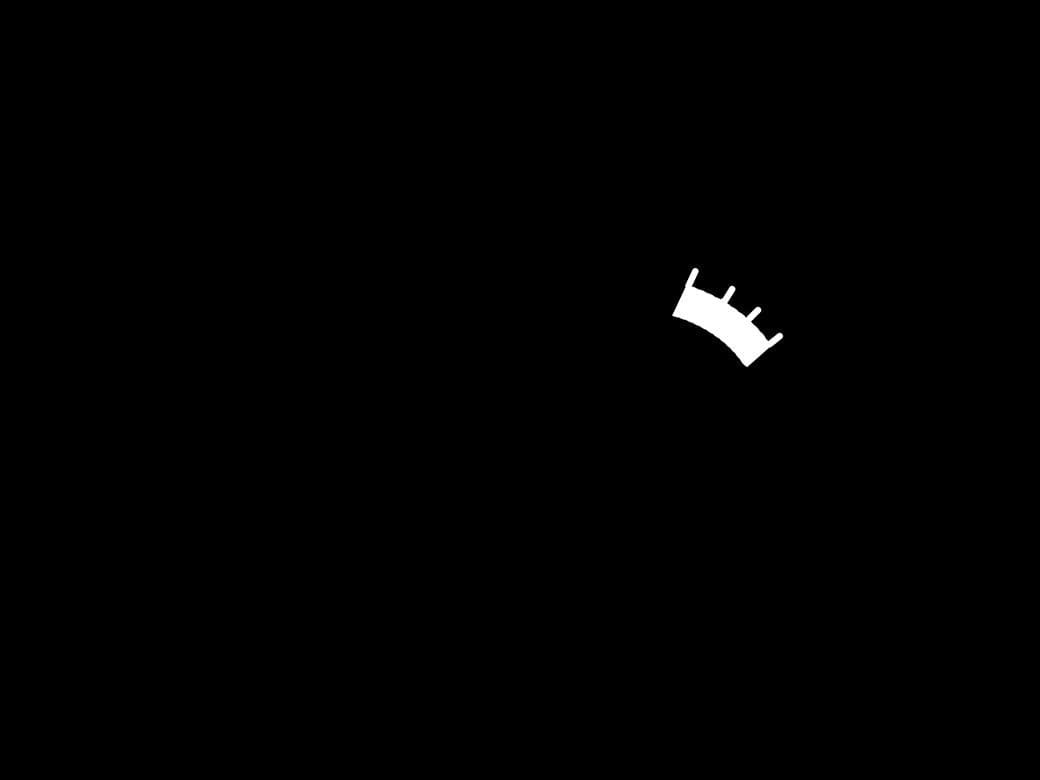
Terminal result of the meter decals and text:
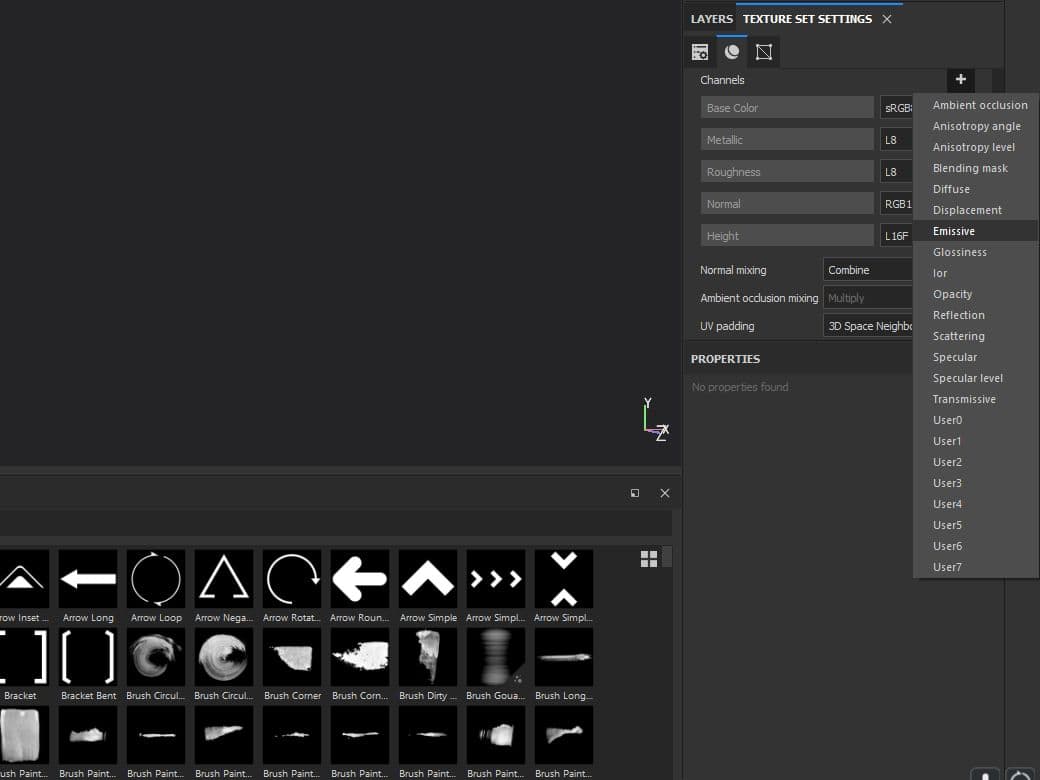
The meter too has an emissive channel. To exist able to use the emissive channel in substance painter, you first need to add it back in the texture set settings.
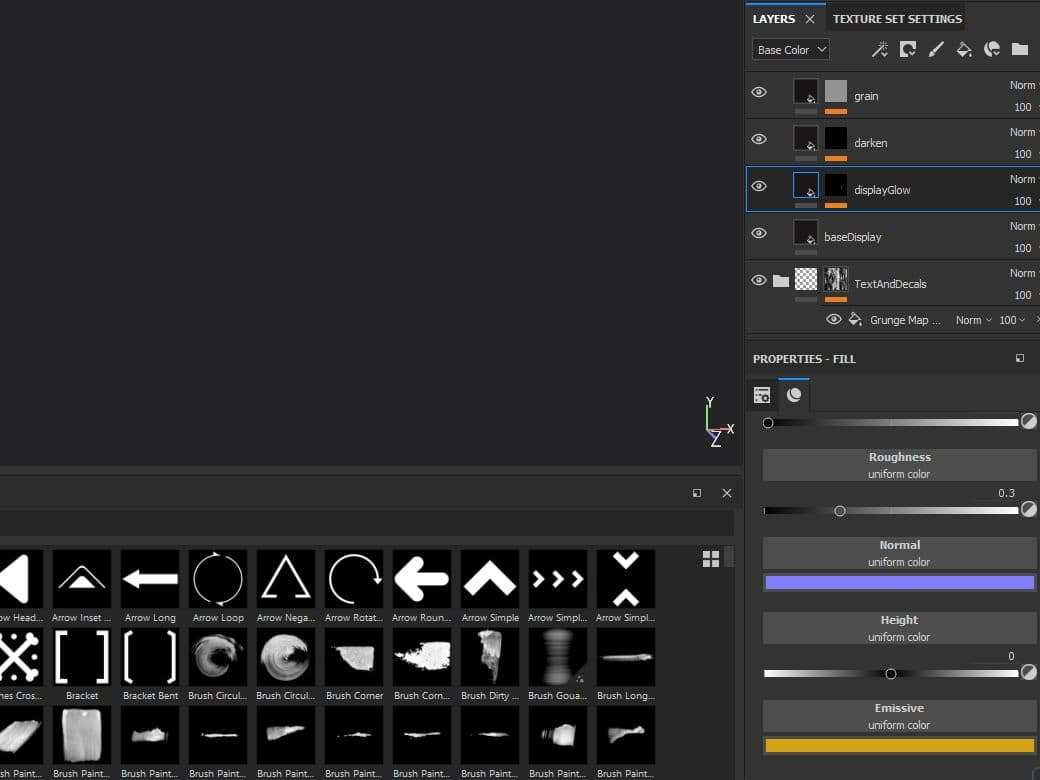
In the rendering section I'll show yous how I set the emissive channel inside Marmoset toolbag.
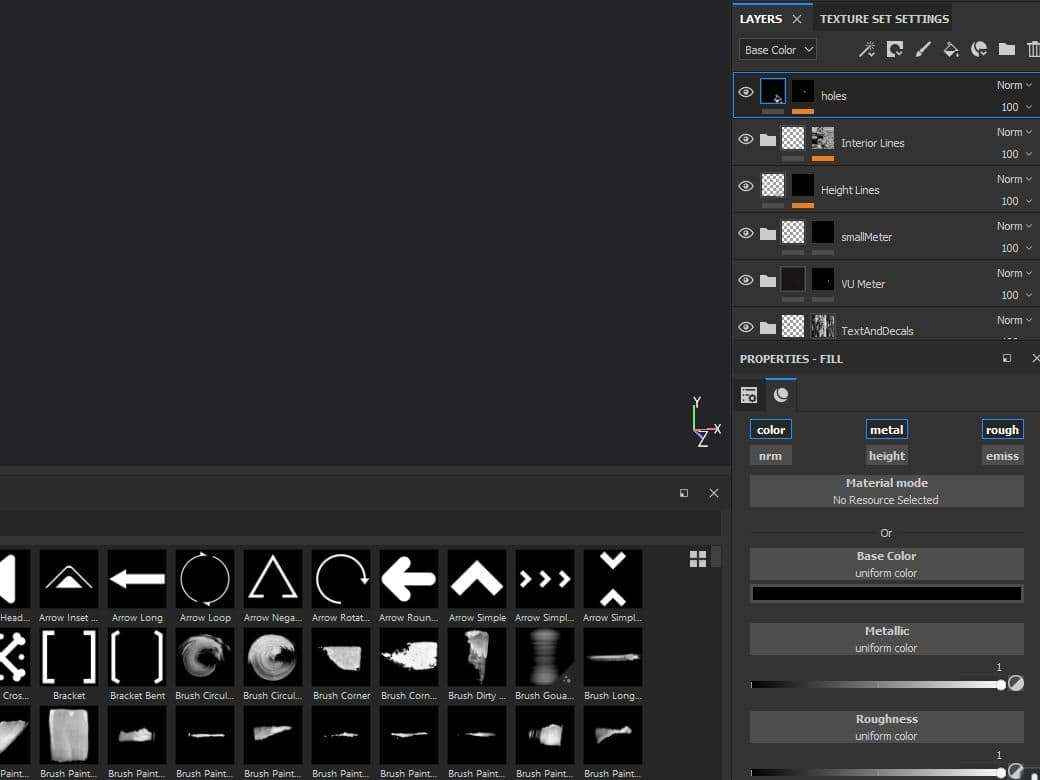
A last little play a trick on in Substance Painter is how to brand holes seem deeper than they are. Information technology'southward a really uncomplicated one, but an effective one. Just create a new layer with full black, metallness, and roughness. Then paint the holes with the bones difficult castor and that's it!
Rendering
Now comes the last part! We are gonna be rendering within marmoset which is really directly forward. First affair is to drag your object into the scene and plug in the textures.
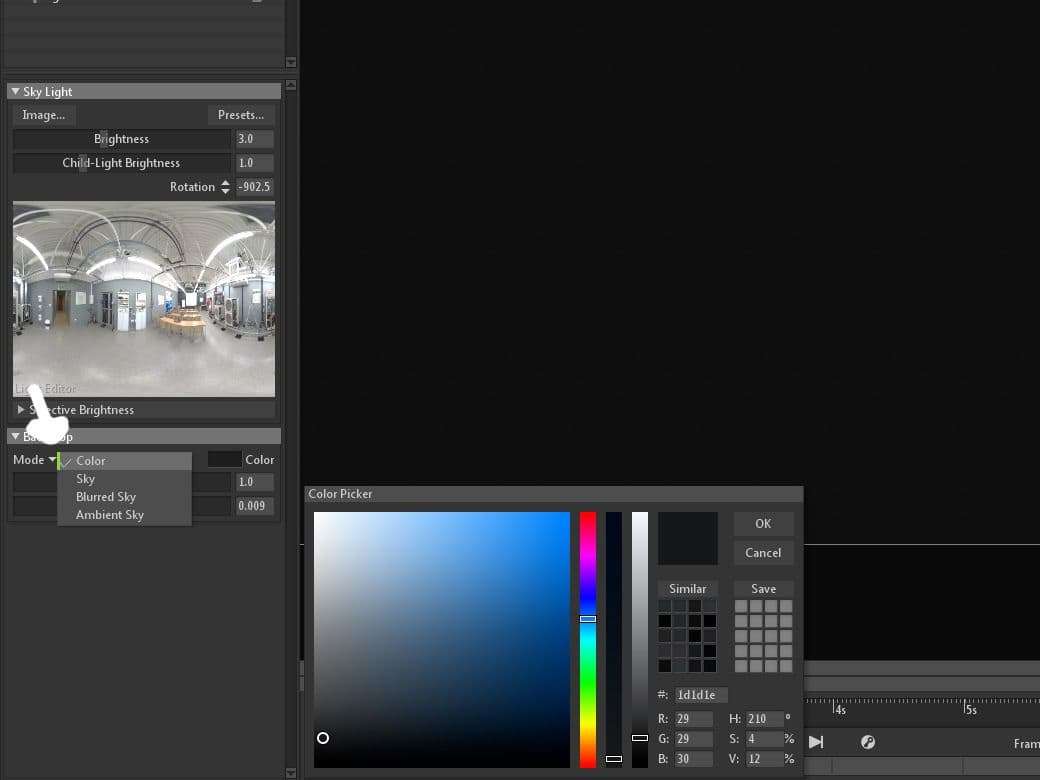
I similar to ready the background to a dark colour, similar dark blue or even almost blackness so the main focus is the object I'thousand rendering.
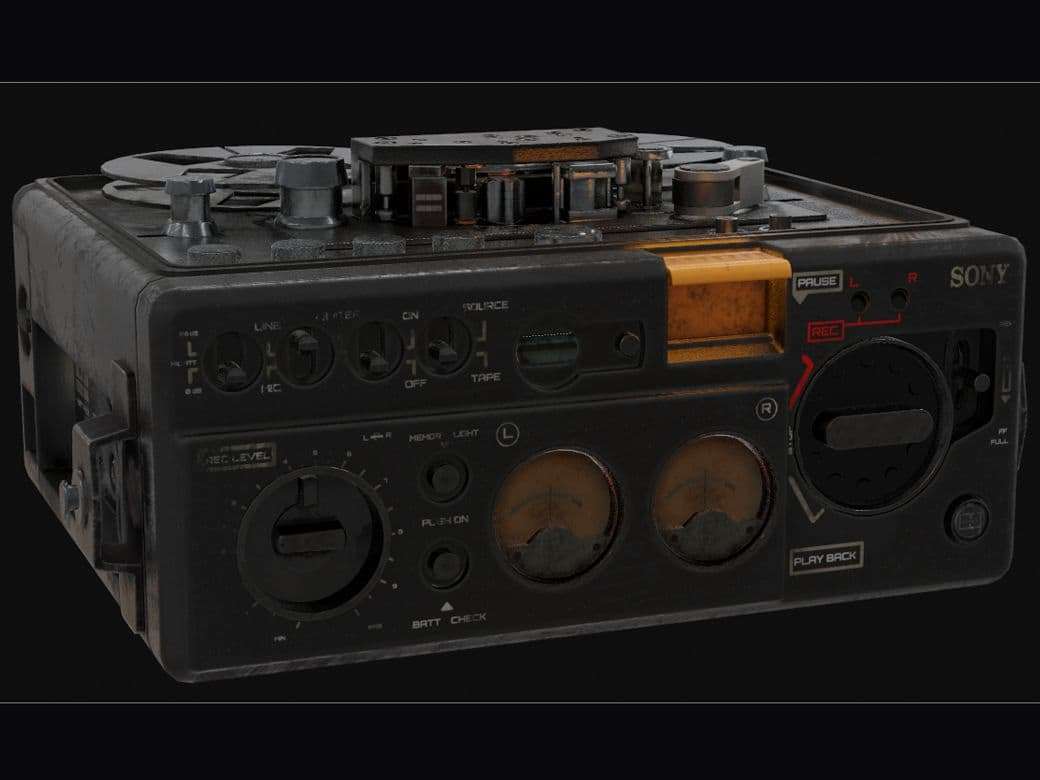
Call up to near probable plough the "flip Y" box in the normal map.
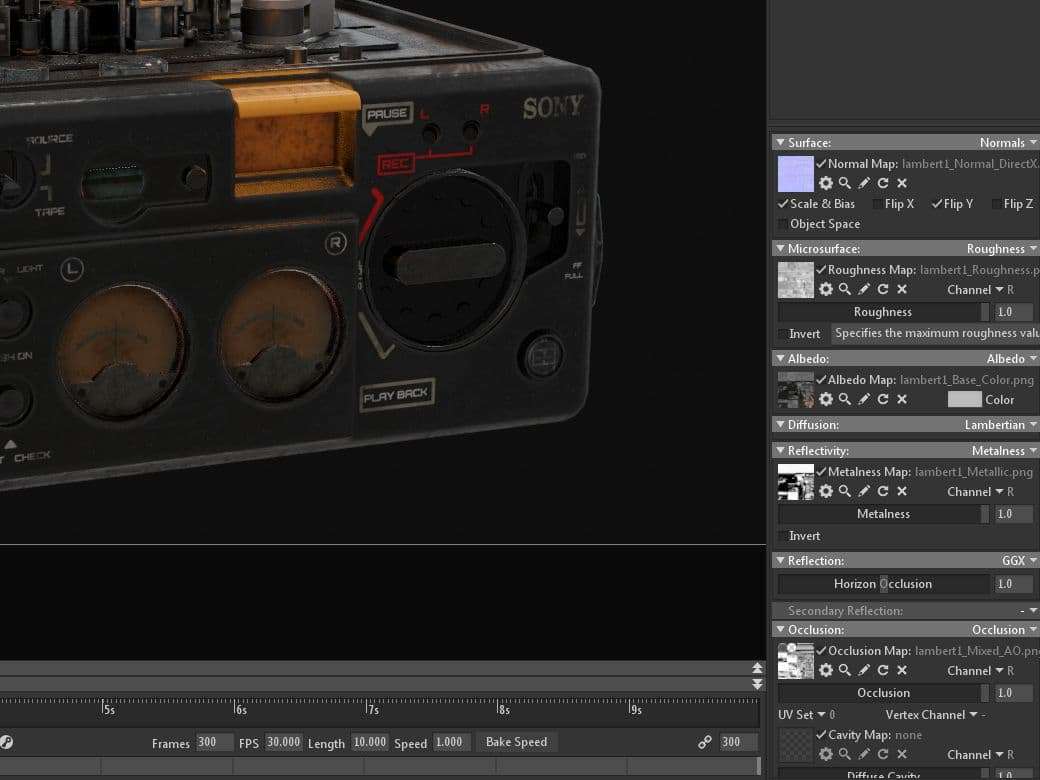
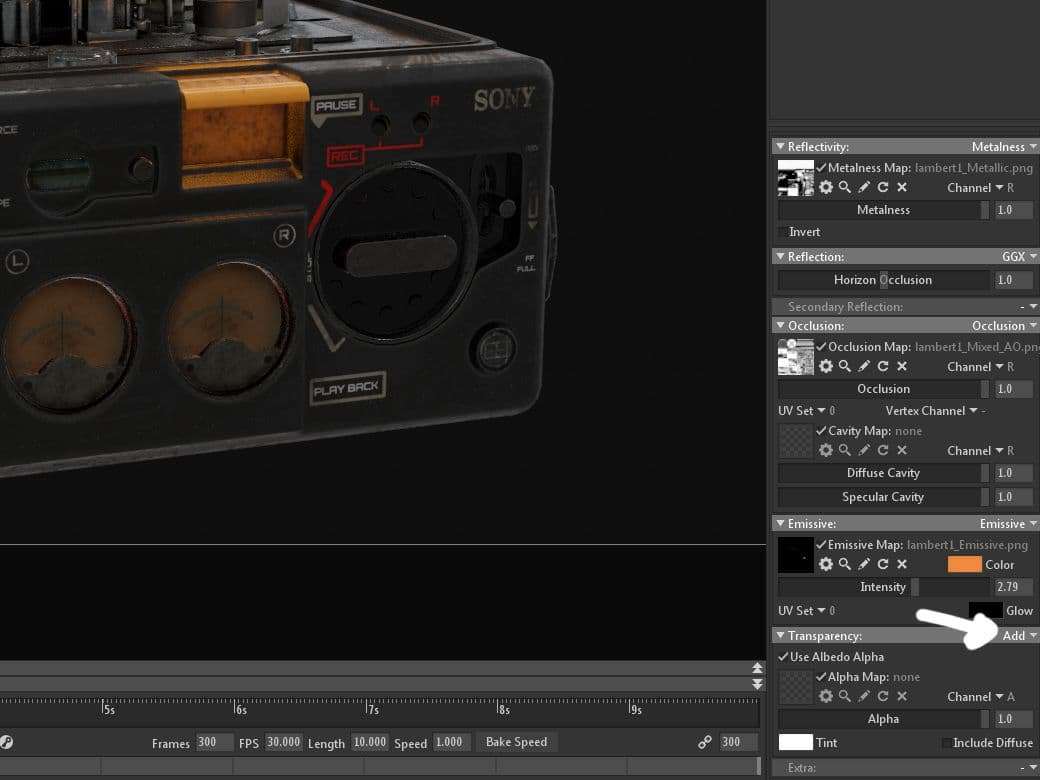
Also on every channel except on the albedo map you demand to turn off "sRGB color infinite" box. And this is the mode I set up my emissive map:
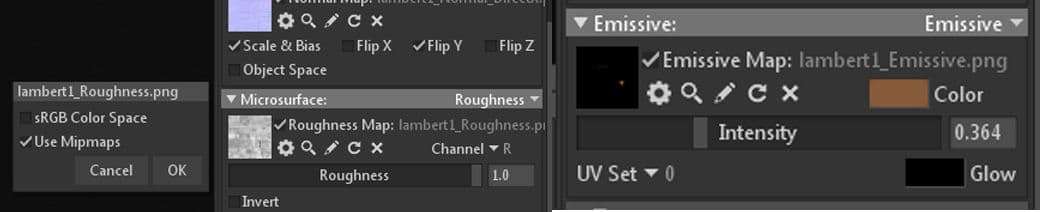
For the glass material add together the aforementioned texture to the corresponding areas then change it to "add" and that's it.
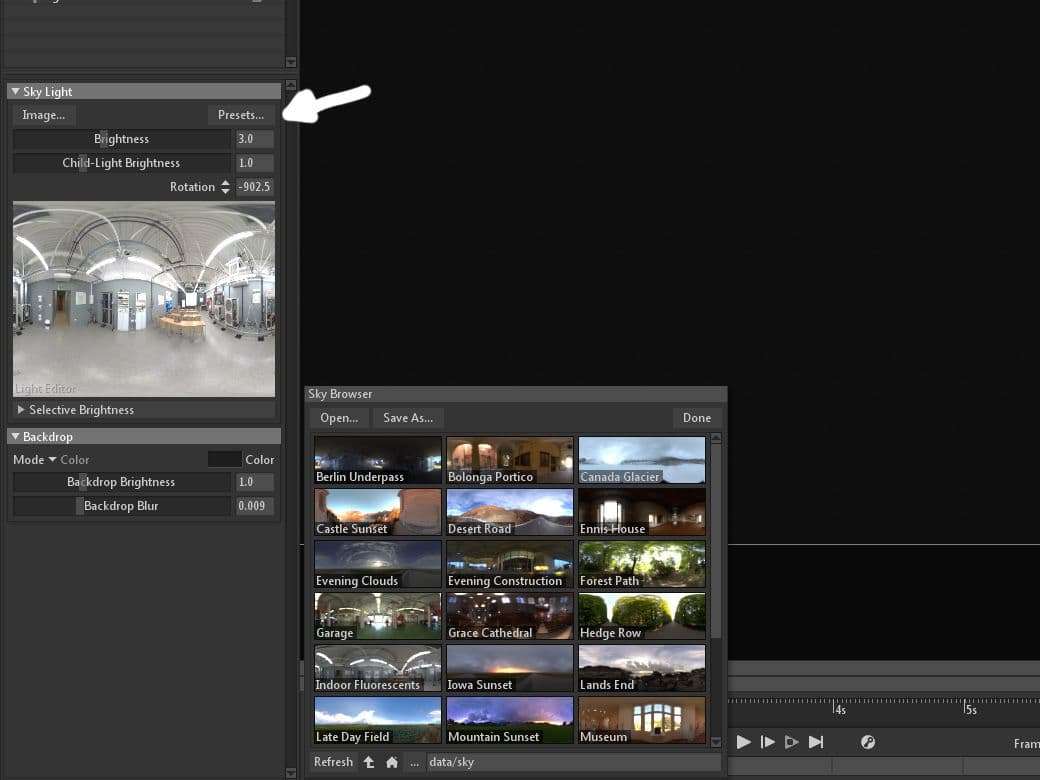
In one case everything is set on the maps and the geometry, it is time to start changing the lights and render settings. Start thing I always do is change the HDRI to one of the presets I similar.
And so I alter the mode from any of the skies to colour. I similar to set the groundwork to a dark colour, like dark blue or even nearly blackness so the chief focus is the object I'm rendering.
And I play with the intensity until I take something I similar. In this example three.0.
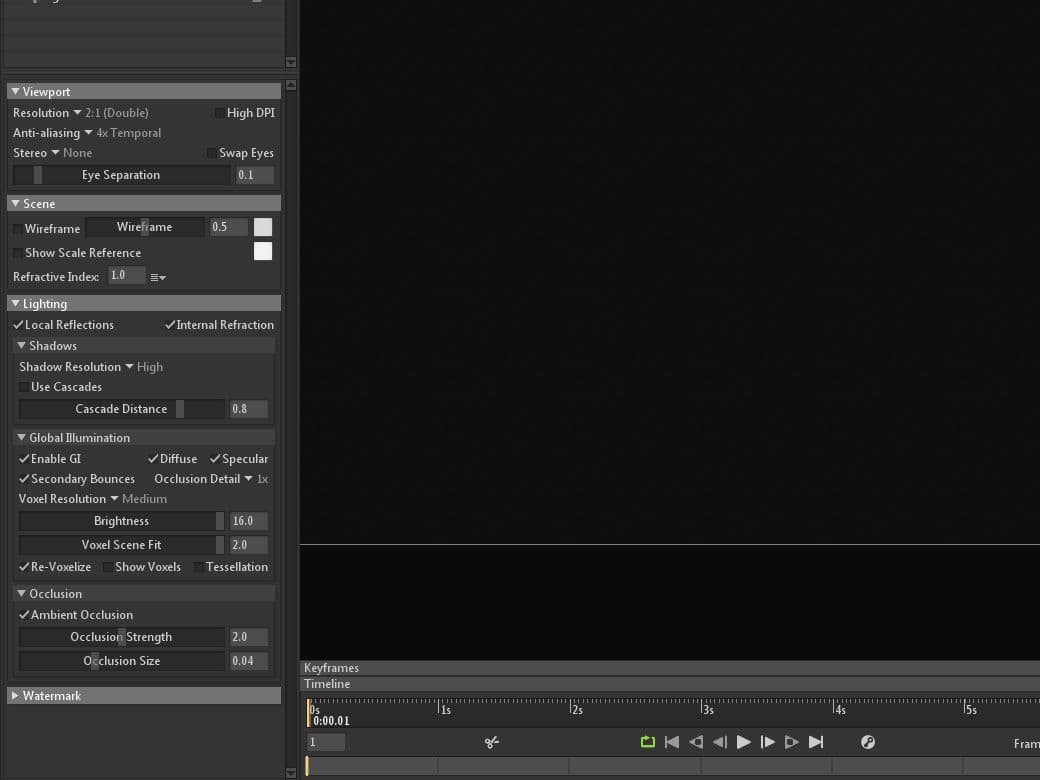
After setting my main light set, I started playing with the return settings. First I gear up the resolution to double, and and so enabled local reflections and internal refractions, then I also enabled GI and ambient occlusion.
Moving onto the camera settings, I usually don't mess that much with it. But the limits in case I'1000 thinking of exporting a marmoset viewer file, and the field of view, which in this example I used 15.
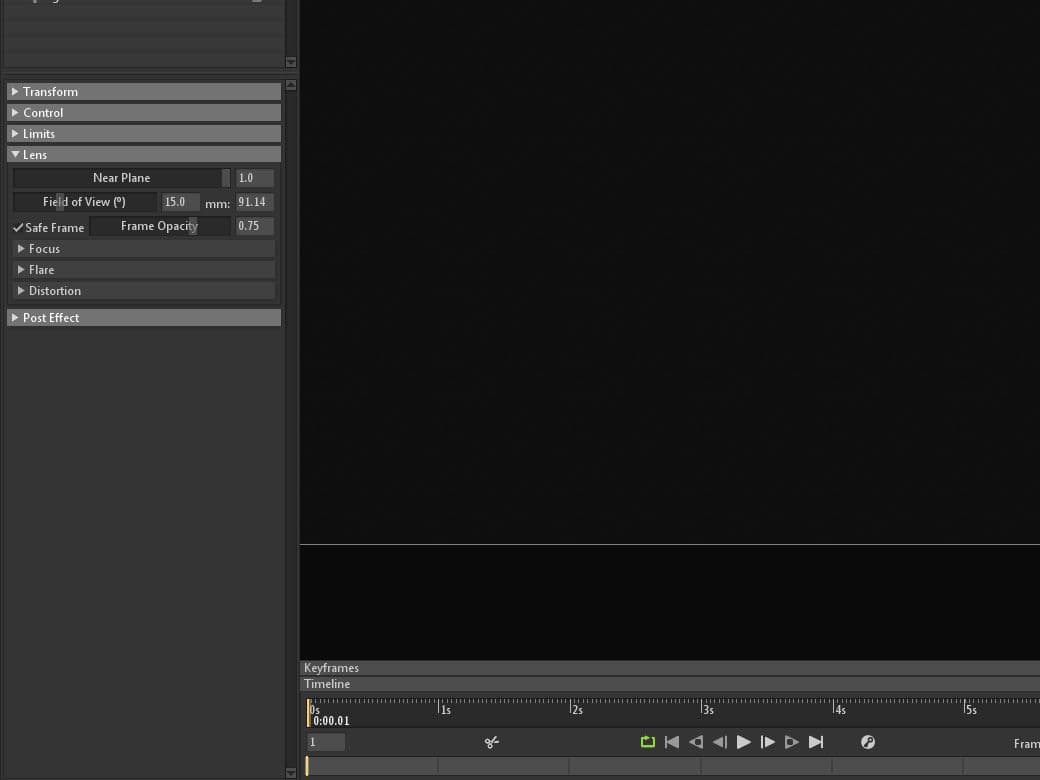
You can also play with the post effects if you want to add some vignette or flare, but you tin as well practise that in Photoshop - this stage is a personal preference.
For this project I used a elementary three betoken lighting, so for other shots I added some lights so it was easier to see the other details. Calculation lights in marmoset is super easy. My favourite fashion of adding lights is to bespeak the camera I'grand looking through to the place I want lit, and striking "Ctrl L". The calorie-free will be created where you were pointing from.
And so yous can select the light and starting time playing with some of the parameters and fifty-fifty change the colour. I like to bank check the box "Contact Refinement", play with the spot angle and effulgence.
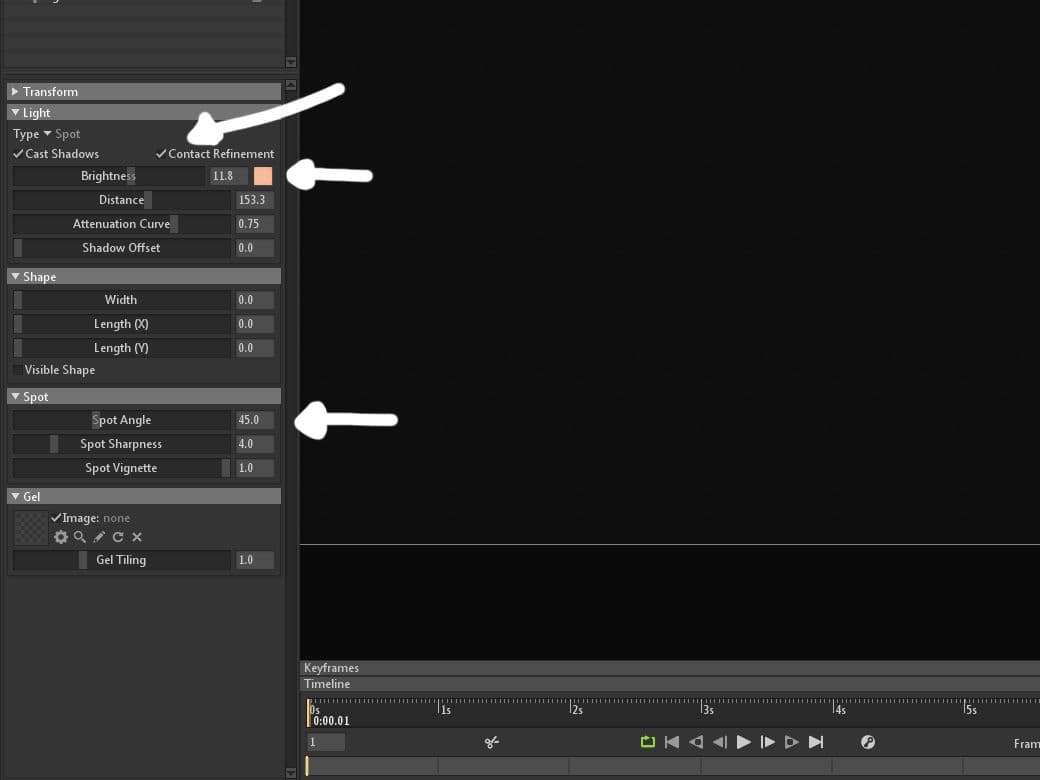
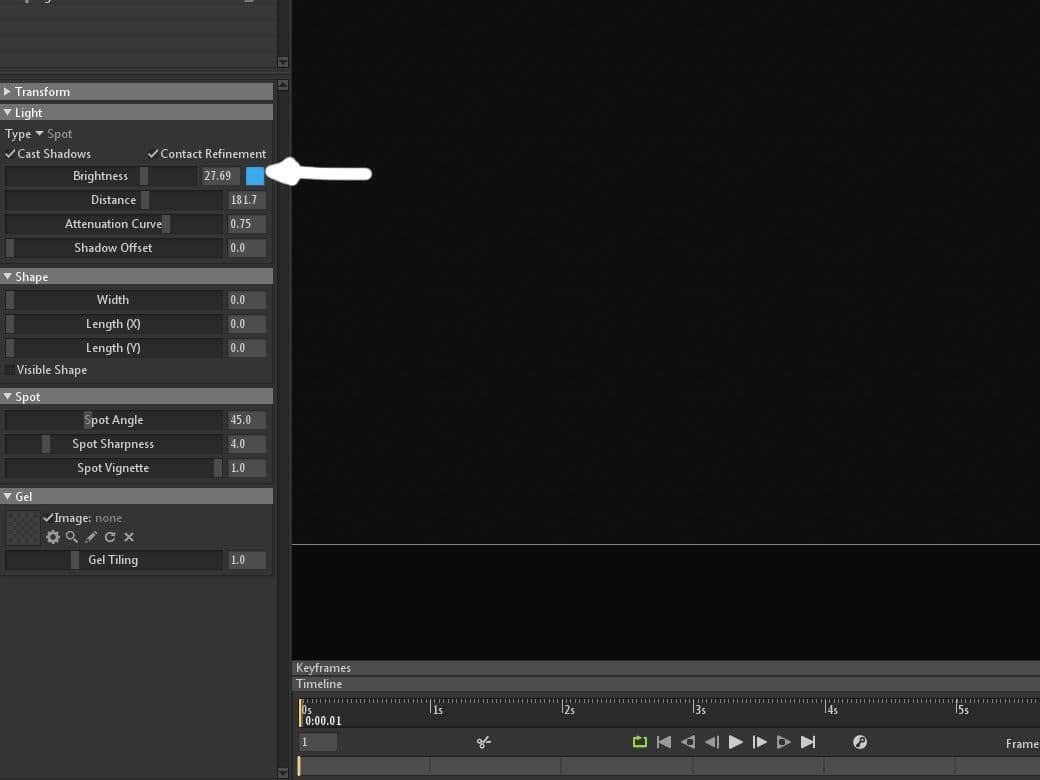
For the back light I added a light with a blueish tint, because I like the style information technology looks.
Concluding thing you lot need to do is to click on capture. Open the settings and change it to the resolution you lot like, bump the sampling to x100 or whatever you similar and hit "ok". Just recollect the higher the samples, the college the render is going to take. I think that for some single images information technology'south worth the wait, so keep information technology in x100. If you are planning to do some post piece of work in Photoshop export information technology as a PNG with transparency and yous'll exist set.
Hither are my final renders, thanks for reading!
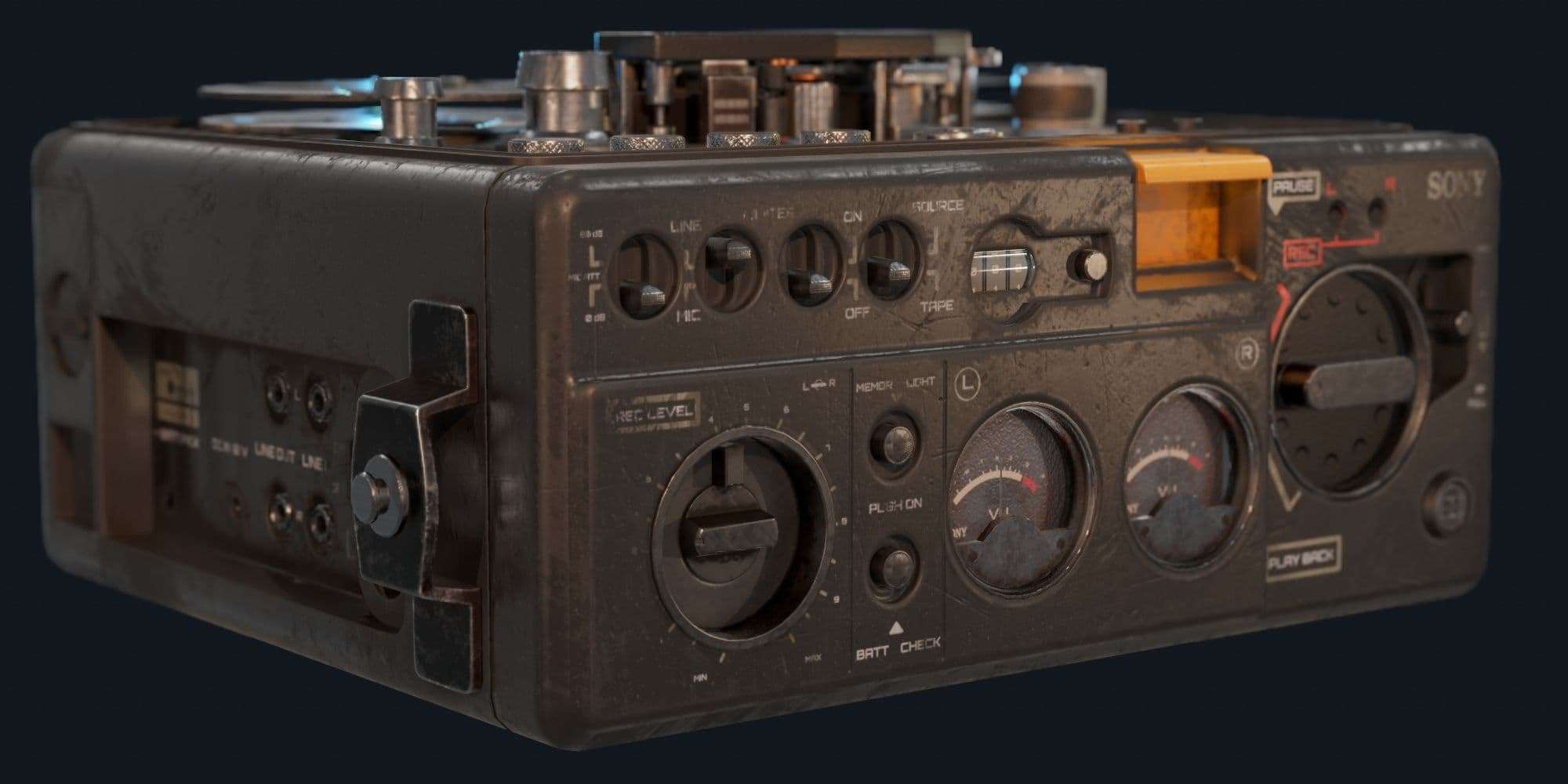
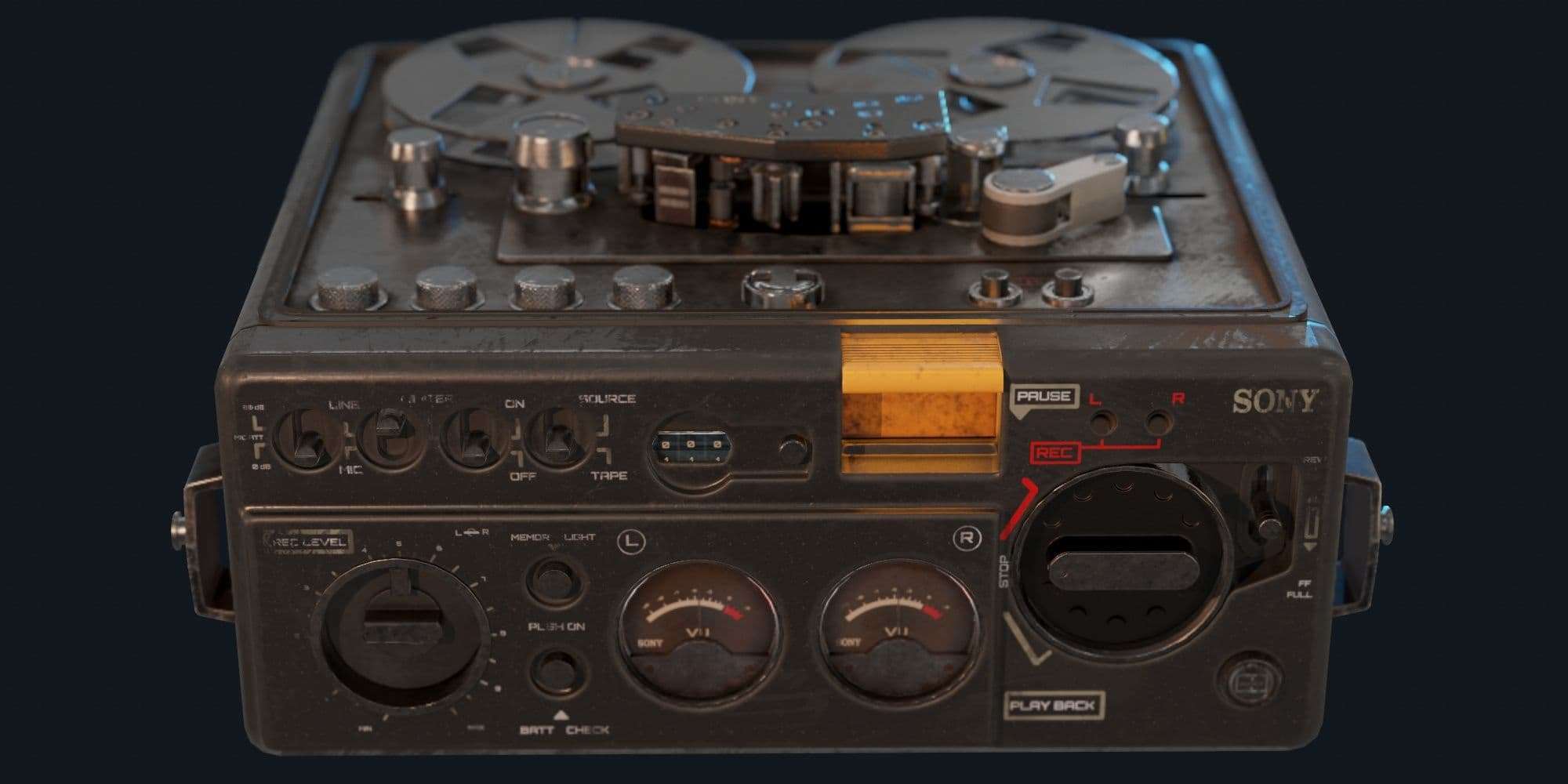
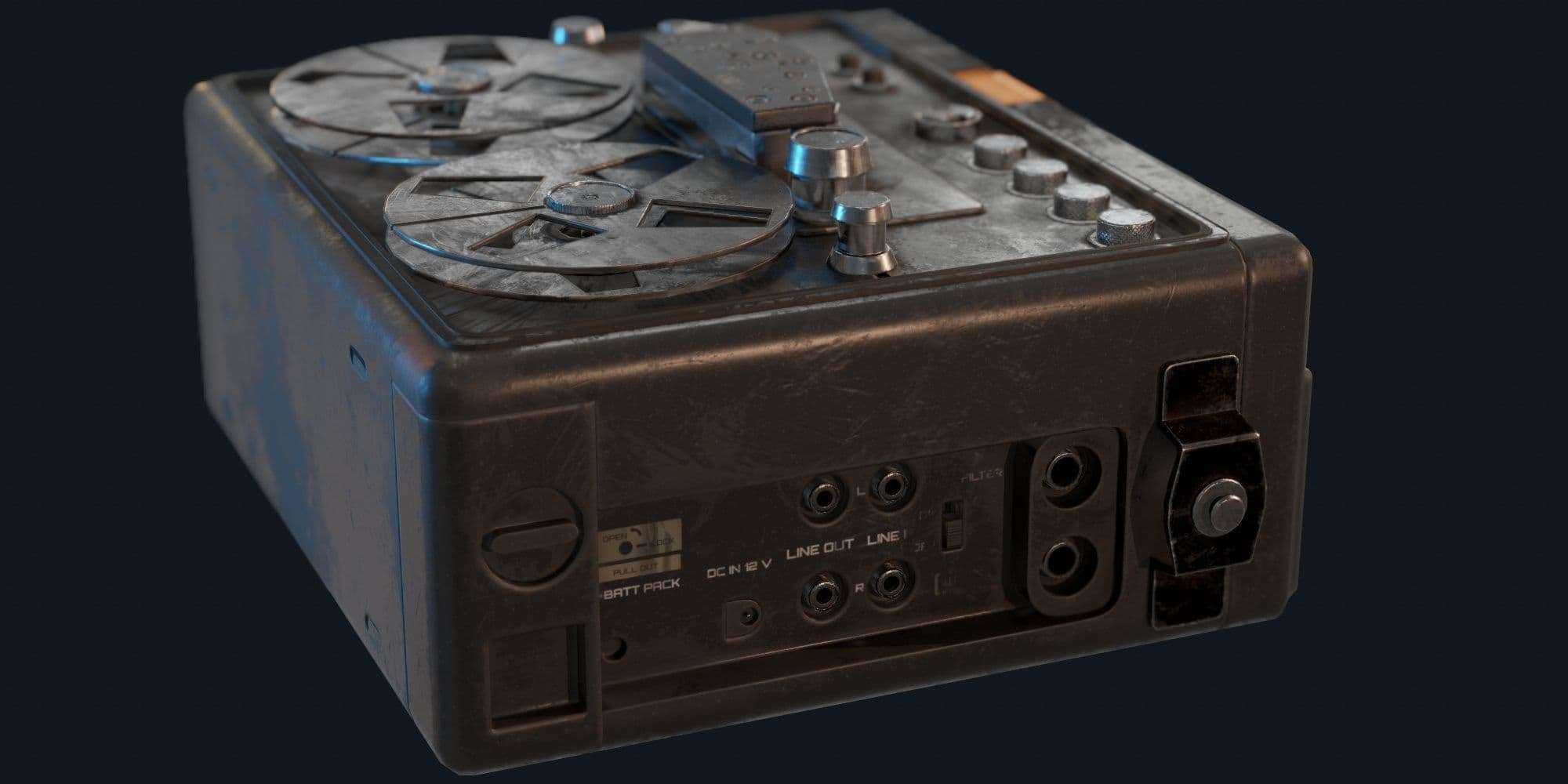
Yous can find more of Rogelio'south work on The Rookies hither.
Source: https://discover.therookies.co/2020/12/10/creating-props-for-games-using-maya-and-zbrush/

Post a Comment for "What Is the Workflow From Maya to Zbrush Prop Art"